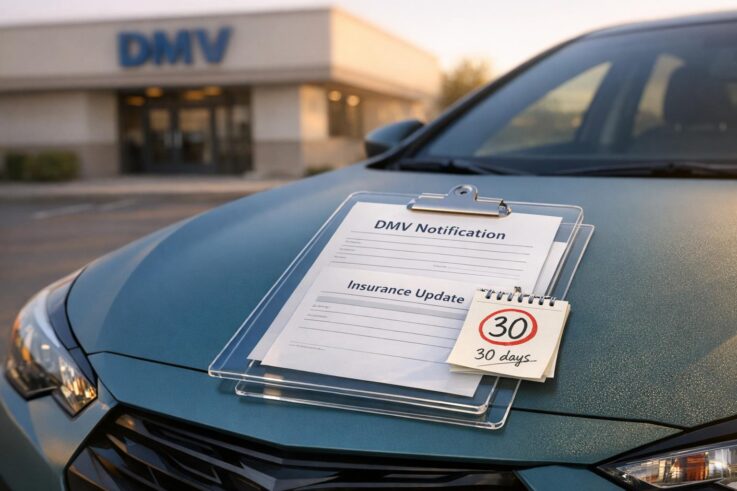
If you add a vinyl wrap to your car, you might need to report it to the DMV and your insurance company. Why? In some states, changing your vehicle’s primary color requires updating your registration. Insurance providers also see wraps as car modifications, which could impact your policy or claims. Here’s what you need to know:
DMV Reporting: States like California and Texas require you to notify the DMV if the wrap changes your car’s dominant color. Deadlines vary by state (e.g., California: 10 days, Texas: 30 days).
Insurance Notification: Wraps can increase repair costs or affect your car’s value. Failing to report them could lead to denied claims or higher out-of-pocket expenses.
Risks of Not Reporting: Unreported wraps can result in fines, reduced insurance payouts, or issues during resale.
To stay compliant, check your state’s DMV rules, update your insurance policy, and keep all documentation related to the wrap. Taking these steps ensures legal and financial protection.
DO YOU HAVE TO NOTIFY THE DMV IF YOU WRAP YOUR CAR A DIFFERENT COLOR?!
sbb-itb-74b4b25
When You Need to Report a Vinyl Wrap to the DMV
State-by-State DMV Reporting Requirements for Vinyl Wraps
Whether you need to report a vinyl wrap to the DMV depends on your state’s rules and whether the wrap changes your vehicle’s primary color. If the wrap alters the main color listed on your registration, most states require you to notify the DMV. This helps law enforcement accurately identify your vehicle during traffic stops, theft recovery, or emergencies.
State Requirements for Reporting Color Changes
Each state approaches vinyl wrap reporting differently, with varying deadlines. California, for instance, has one of the most stringent rules: you must report any color change within 10 days of applying the wrap. Keith Purkiss, CEO of Car Wrap Wizard, explains:
"In the Golden State, wrapping your car in a new color is a golden opportunity to refresh your ride’s style. Just remember, California law requires you to notify the DMV of this change within 10 days, or you might face fines".
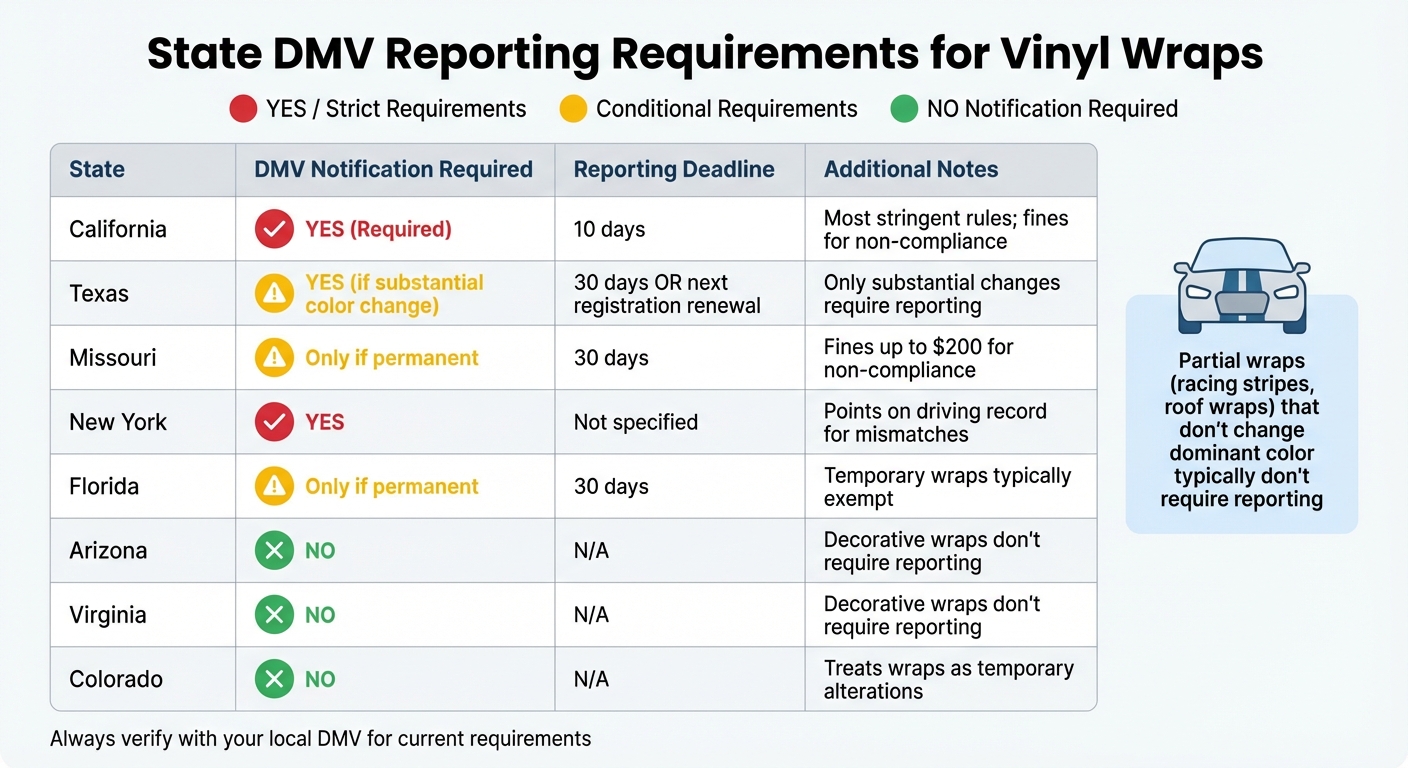
In Texas, you’re required to report substantial color changes either during your next registration renewal or within 30 days of making the modification. Missouri gives you 30 days to update your records if the change is permanent, with fines of up to $200 for non-compliance. On the other hand, states like Arizona and Virginia usually don’t require any reporting for decorative wraps.
State
DMV Notification Required
Reporting Deadline
California
Yes
10 days
Texas
Yes (if substantial)
30 days / Next renewal
Missouri
Only if permanent
30 days
New York
Yes
Not specified
Florida
Only if permanent
30 days
Arizona
No
N/A
For partial wraps – such as racing stripes or a wrapped roof – that don’t change the vehicle’s dominant color, notification typically isn’t necessary. Similarly, clear paint protection films (PPF) don’t require reporting since they don’t alter the vehicle’s appearance.
You’ll also need to consider whether your wrap is temporary or permanent, as this affects your obligations.
Temporary vs. Permanent Vinyl Wraps
Most vinyl wraps are technically temporary because they can be removed, revealing the original paint underneath. However, states like California still require reporting, even for wraps that aren’t permanent. A mismatch between the wrap color and your registration can create identification issues.
States such as Missouri, Texas, Alaska, and Wisconsin only require reporting if the color change is deemed permanent. Meanwhile, Colorado treats wraps as temporary alterations and generally doesn’t require DMV notification at all. If you’re uncertain about your state’s requirements, it’s a good idea to check with your local DMV before applying a wrap. And if you remove a previously reported wrap, make sure to update the DMV to restore your vehicle’s original factory color.
Notifying Your Insurance Provider About a Vinyl Wrap
Aside from informing the DMV, letting your insurance company know about a vinyl wrap is just as important. Insurers typically classify vinyl wraps as modifications since they alter the car’s appearance, which can impact its value and risk assessment.
Why Insurance Companies See Wraps as Modifications
Insurance companies view vinyl wraps as modifications because they can influence repair costs and risk factors. Wraps, especially intricate or high-end designs, can drive up repair expenses. Additionally, flashy or distinctive colors might make your car more appealing to thieves. If your wrap includes business logos or branding, your insurer may require a commercial policy instead of a personal one.
"Wrapping your car is a modification, and most insurance companies want to know about it. Failing to notify them could cause coverage issues later." – Vinyl Wrap Pro
For example, a premium wrap like a $5,000 chrome finish might increase your monthly premium by $5 to $15. That said, many insurers still prioritize factors like your driving history and location over cosmetic changes when determining rates.
Steps to Update Your Insurance Policy
To avoid potential coverage issues, contact your insurance provider as soon as you install a vinyl wrap. Some insurers, like GEICO, require all wraps to be reported and may even request a visual inspection. Others, like Progressive, usually allow personal wraps with a simple notification but mandate a different policy for commercial wraps.
When notifying your insurer, be ready to submit documents such as the invoice, photos of the wrap, and details about the installer. This ensures that the wrap – and the labor involved – are covered under a modification endorsement.
Always get written confirmation from your insurer, whether it’s an email or an updated policy declaration page. This step is crucial to avoid disputes later. For instance, one case revealed that failing to report a wrap reduced a claim payout by $2,800. Similarly, a California landscaping company initially faced denied coverage for ten wrapped trucks. After submitting invoices and adding a modification endorsement, they saved over $9,000 in wrap repair costs within a year.
Taking these steps ensures your vinyl wrap is properly documented, protecting both your vehicle’s legal compliance and its resale value.
Risks of Not Reporting a Vinyl Wrap
Not reporting your vinyl wrap can lead to trouble with the DMV and your insurance company. From traffic citations to reduced insurance payouts, the financial impact can be significant – sometimes running into thousands of dollars.
Legal and Financial Consequences
If the color listed on your vehicle registration doesn’t match its actual appearance, you could face legal penalties during routine traffic stops. For example, in New York, this mismatch can result in points on your driving record. In some areas, like Missouri, failing to report a major color change is treated as a misdemeanor, with fines reaching up to $200. California takes it a step further, requiring any color change to be reported within 10 days to avoid citations.
There are also risks tied to your vehicle registration and inspections. If a wrap obscures vital details like your license plate or VIN, authorities may revoke your vehicle’s registration. In addition, wraps that use reflective materials or alter light transmission – such as reducing windshield visibility below 70% in Pennsylvania – can lead to inspection failures and fines. Removing non-compliant wraps to meet state safety guidelines could add to your expenses.
Insurance issues are another major concern. In March 2026, a Tesla owner in New York lost $2,800 in claim payouts because her satin pink wrap wasn’t reported. Similarly, a Florida business owner had to cover $3,200 in wrap replacement costs for five delivery vans after their insurer only paid for base paint repairs.
On top of these immediate penalties, unreported wraps can also hurt your car’s resale value.
Impact on Vehicle Resale Value
When your vehicle’s registered color doesn’t match its appearance, potential buyers may hesitate, fearing the wrap might be concealing damage, rust, or other problems. This mismatch can complicate the title transfer process and may even interfere with required safety inspections in some states. Additionally, unpaid fines or citations for inaccurate registration could follow the vehicle’s record, making it less appealing to buyers.
To protect your vehicle’s resale value, it’s important to ensure the registered color matches the wrap. Keeping invoices from professional installers can also help reassure buyers about the quality and legitimacy of the work.
How to Report a Vinyl Wrap: DMV and Insurance Steps
Once you’ve applied a vinyl wrap to your vehicle, it’s essential to follow proper reporting steps to avoid fines, issues with insurance claims, or complications when selling the car. Here’s how to navigate the process with both the DMV and your insurance provider.
Reporting to the DMV
The requirements for reporting a vinyl wrap vary depending on your state. Some states, like California, New York, Colorado, and Vermont, require you to report color changes resulting from vinyl wraps. On the other hand, states such as Florida and Arizona often don’t mandate notification for decorative wraps. If your state does require reporting, you’ll need to complete the necessary paperwork – California, for example, uses Form REG 156, while Colorado requires Form DR 2698.
When filling out the forms, include your VIN, current registration details, and a clear description of the new primary color (e.g., "Midnight Blue" instead of just "Blue"). Some states might also ask for photos of the wrapped vehicle. You can submit these documents in person, by mail, or online, along with the required fee to update your registration.
Pay close attention to deadlines. In California, you have only 10 days to report the change after applying the wrap. Meanwhile, in Texas, you can wait until your next registration renewal to update the information.
Once you’ve handled the DMV requirements, the next step is to notify your insurance company.
Notifying Your Insurance Provider
It’s a good idea to reach out to your insurance agent before installing the wrap to understand how it might affect your policy. They can let you know if you need additional coverage, such as a modification endorsement or custom parts coverage. After the wrap is installed, provide the insurance company with the professional installation invoice, material details, and high-resolution photos of the finished vehicle to document its value. Always request written confirmation that your policy has been updated to reflect the modification.
If your wrap includes business logos or branding, your insurer might require you to switch from a personal auto policy to a commercial policy.
Keep all related documentation – such as receipts, material specifications, and photos – organized in a dedicated folder. If you decide to remove the wrap later and return the vehicle to its original factory color, make sure to notify both the DMV and your insurance provider to keep your records accurate.
Why Choose Auto Sound & Security for Vinyl Wrap Services
Professional Vinyl Wrap Installations
Getting a vinyl wrap professionally installed isn’t just about looks – it’s about ensuring durability and compliance with regulations. Auto Sound & Security specializes in professional vinyl wrapping services that not only enhance your vehicle’s appearance but also protect its paint. They use DOT-approved materials from top-tier brands like 3M and Avery Dennison, ensuring compliance with reflectivity and safety standards. With proper installation and care, these wraps can last five years or more.
Additionally, Auto Sound & Security helps with the necessary documentation for DMV and insurance purposes. This includes detailed invoices, material specifications, and high-resolution photos to reflect your vehicle’s updated value. They also ensure the wrap is applied without obstructing critical elements like license plates, VINs, or safety lighting – issues that could lead to failed state safety inspections.
Authorized Dealer for Premium Brands
Auto Sound & Security’s commitment to quality extends beyond vinyl wraps. As an authorized dealer for top brands like Viper, Compustar, Kicker, Pioneer, Kenwood, JVC, and Alpine, they bring the same expertise and high standards to every vehicle modification they handle. Their access to premium materials and adherence to manufacturer guidelines ensures a flawless finish. Whether you’re pairing a vinyl wrap with a new alarm system or upgrading your car’s audio, they ensure all modifications work together seamlessly, without interfering with sensors, cameras, or radar systems.
Their attention to detail doesn’t just enhance your vehicle – it protects its value. For example, one vehicle owner lost $2,800 in an insurance claim because their non-factory finish wasn’t properly documented. By providing thorough documentation, Auto Sound & Security helps safeguard your investment and ensures peace of mind.
Conclusion
Vinyl wraps can completely change the look of your vehicle while also protecting its original paint. But owning a wrapped car comes with certain responsibilities you can’t afford to ignore. Whether you’re wrapping your car for aesthetics, branding, or added protection, informing the DMV and your insurance provider is more than just a courtesy – it’s a legal and financial safeguard.
Each state has its own reporting rules, so it’s crucial to research and follow your local requirements. Missing this step can result in fines, suspended registration, or even issues during routine traffic stops. On the insurance front, failing to disclose a wrap could leave you vulnerable. As Keith Purkiss, CEO of Car Wrap Wizard, warns: "If you decide to wrap your car and don’t tell your insurance company, you’re playing with fire… your claim could be outright denied, leaving you to cover all costs out of pocket". This stark reminder emphasizes the risks of skipping this critical step.
Ignoring these responsibilities can lead to costly mistakes, from denied insurance claims to hefty fines.
To protect yourself, take a proactive approach. Keep proper documentation, such as invoices and clear photos of the wrap, and notify both your DMV and insurer as soon as possible. Choosing a professional installer, like Auto Sound & Security, not only ensures expert application but also provides the guidance and paperwork you need to stay compliant. By handling these details correctly, you’ll safeguard both your car and your peace of mind.
FAQs
Does a partial wrap count as a color change?
A partial wrap might be considered a color change if it significantly alters the look of your vehicle, depending on your state’s DMV rules. Some states mandate reporting any changes that noticeably modify the vehicle’s original color on its registration. To stay on the safe side and avoid potential legal or insurance complications, review your local DMV regulations and inform your insurance provider if required.
Will my insurance cover wrap repair after an accident?
If your vehicle has a vinyl wrap and you’ve been in an accident, your insurance might cover the repair – but only if it’s part of your policy. Vinyl wraps are typically viewed as a vehicle modification, which means you need to let your insurance company know about it beforehand. Failing to disclose this could affect your coverage. Always check with your insurer to clarify how they handle modifications like wraps under your plan.
Do I need to update records again if I remove the wrap?
If you take off a vinyl wrap and it alters your vehicle’s appearance or registration details, you might need to update your vehicle records. For instance, in states such as California, you’re required to report a color change to the DMV. Be sure to review your local DMV rules to stay compliant with any reporting obligations.
We use cookies to ensure that we give you the best experience on our website. If you continue to use this site we will assume that you are happy with it.