Remote Start Installation: Common Questions Answered
Remote start systems with smartphone control allow you to start your car remotely using a key fob or mobile app. They improve comfort by pre-heating or cooling your car and can even activate features like heated seats or defrosters. These systems are especially useful in extreme weather, ensuring your vehicle is ready when you are. They also include safety features like keeping doors locked and shutting the engine off if the brake is pressed without the key.
Here’s what you need to know:
Compatibility: Most vehicles made after 2000 can support remote start systems, but factors like ignition type and transmission (manual, automatic, hybrid) affect compatibility. A bypass module is often required for cars with advanced security systems.
DIY vs. Professional Installation: DIY installation may save money but is complex, risky, and can void your warranty. Professional installation ensures proper integration, safety, and warranty protection, usually costing $150–$400.
Costs: Equipment ranges from $50–$500+ depending on features, with labor adding $75–$150 per hour. Systems with smartphone control or GPS tracking cost more.
Safety Features: These systems include safeguards like engine shutdown if the brake is pressed without a key, runtime limits, and hood sensors to prevent accidental starts.
For hassle-free installation, professional services like Auto Sound & Security provide expert installation, compatibility checks, and warranties. They offer systems from trusted brands like Viper and Compustar, ensuring reliable performance tailored to your vehicle.
How To Install Compustar Remote Starter / Security System & Alarm Installation Tips | AnthonyJ350
sbb-itb-74b4b25
Vehicle Compatibility for Remote Start Systems
To enjoy the perks of a remote start system, you first need to ensure your vehicle is compatible. Compatibility depends on factors like your car’s make, model, year, and electronic system. For instance, most vehicles manufactured after 2000 include immobilizers or chipped keys. These require a bypass module to replicate the security chip during remote start; without one, the engine won’t start. This makes it crucial to consider your car’s ignition type and transmission before selecting a system.
Your ignition setup plays a big role. Vehicles with traditional key ignitions are simpler to equip, while push-to-start models demand more advanced modules for seamless integration. Similarly, most remote start kits are designed for automatic transmissions. If you drive a manual, diesel, or hybrid, you’ll need a specialized kit to ensure safe and proper operation.
How to Check Compatibility
The first step is identifying your vehicle’s year, make, and model. Then, check your ignition type – does your car use a traditional metal key or a push-to-start button? Push-to-start systems require more sophisticated modules and data-bus integration. Also, confirm your transmission type. Manual transmissions, for example, need kits equipped with safety sensors to verify the car is in neutral before starting.
For vehicles with intricate electronics – common in hybrids or many European models – it’s a good idea to consult a professional installer. This helps prevent issues like electrical malfunctions or disabling safety features. If you’re unsure, Auto Sound & Security offers a Vehicle Kit Finder to help you determine compatibility.
Using Auto Sound & Security’s Vehicle Kit Finder
Auto Sound & Security’s Vehicle Kit Finder makes checking compatibility a breeze. By entering your car’s year, make, and model, the tool identifies compatible remote start systems, bypass modules, and harnesses. This eliminates guesswork and ensures you get everything needed for your specific vehicle.
The tool also flags whether your car requires a T-harness – a plug-and-play connector that avoids the hassle of cutting and splicing wires. For example, in January 2026, a remote start kit (SKU: B-6173-262) was developed for the 2023–2025 Honda Pilot with Push-to-Start and gas engines. This kit includes a Firstech HCX Data Module and a T-harness, designed exclusively for automatic transmission models. With this system, you can start the engine using the factory remote by pressing the lock button three times.
DIY vs. Professional Installation
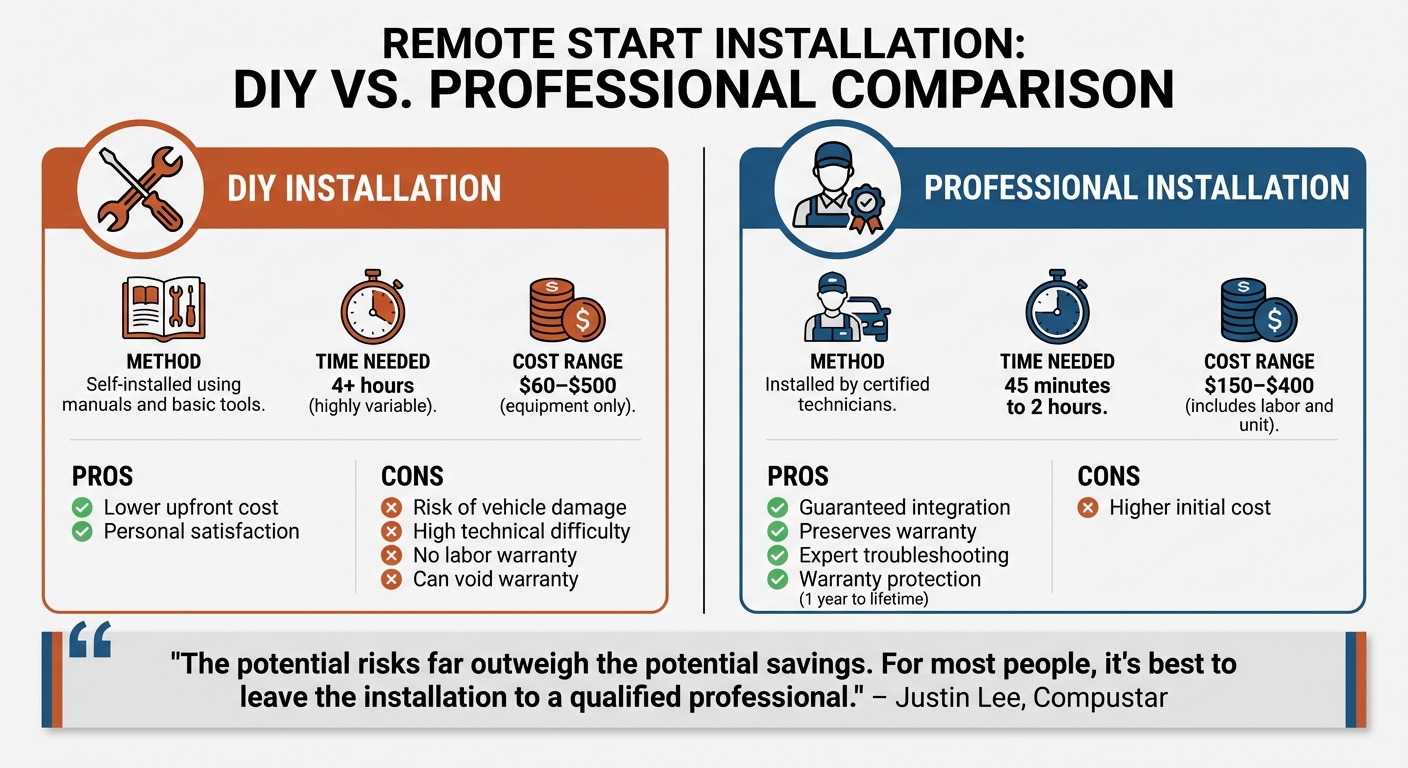
DIY vs Professional Remote Start Installation Comparison
Once you’ve confirmed your vehicle is compatible, the next step is deciding whether to install the remote start system yourself or hire a professional. This choice impacts not only your upfront costs but also your vehicle’s safety and warranty.
Challenges of DIY Installation
At first glance, installing a remote start system yourself might seem like a good way to save money. But modern vehicles come with highly intricate electronic systems, making this task more complicated than it appears. You’ll need a solid understanding of 12-volt automotive electrical circuits to identify the right wires for the 12V constant, accessory, ignition, and starter circuits. Adding to the complexity, wire colors vary by vehicle model, and even with tools like a digital multimeter, pinpointing the tachometer wire – essential for proper operation – can be tricky, even for experienced DIYers.
Another major challenge is integrating the system with your vehicle’s security features. Most cars manufactured after 2000 include immobilizers or chipped keys to prevent unauthorized starting. Improperly bypassing these systems can leave your vehicle vulnerable to theft or cause malfunctions. There’s also the risk of damaging your car during the process. Without specialized tools, removing dashboard panels can lead to cracked plastics, and misidentifying wires – especially yellow-covered ones – can even trigger airbags.
"Incorrect wiring can lead to a variety of problems, including electrical shorts, component damage, and even vehicle fires." – Justin Lee, Compustar
While DIY kits range from $60 for basic models to over $500 for advanced systems, the time investment is significant. Most installations take at least four hours, and mistakes can void your vehicle’s warranty for damaged components. These risks often lead many to reconsider the DIY route.
Benefits of Professional Installation
Professional installation eliminates these risks. Certified technicians have the expertise to navigate complex wiring diagrams and remove dashboard panels without causing damage. They ensure your remote start system integrates seamlessly with your vehicle’s factory security features and other systems.
One of the biggest advantages is warranty protection. While the Magnuson-Moss Warranty Act provides some consumer safeguards, damage caused by a DIY installation can still result in denied warranty claims. On the other hand, professional installations often include their own warranty – ranging from one year to a lifetime – while preserving your vehicle’s existing coverage. Additionally, professionals can complete the job in just 45 minutes to two hours, saving you significant time.
Auto Sound & Security, for example, offers options like Basic Installation and Premium Packages, which include advanced features such as smartphone integration and extended range (up to 3 miles). Professionals also ensure critical safety features, like engine shutdown when the brake is pressed without a key, are properly configured. Plus, you’ll have access to after-installation support for added peace of mind.
"The potential risks far outweigh the potential savings. For most people, it’s best to leave the installation to a qualified professional." – Justin Lee, Compustar
Risk of vehicle damage; high technical difficulty; no labor warranty
Higher initial cost
Time Needed
4+ hours (highly variable)
45 minutes to 2 hours
Cost Range
$60–$500 (equipment only)
$150–$400 (includes labor and unit)
Professional installation typically costs between $150 and $400, often including the unit itself. When you weigh the time saved, warranty protection, and the assurance of a job done correctly, opting for professional installation becomes the safer and more practical choice.
Costs of Remote Start Installation
Remote start installation costs include both equipment and labor, typically ranging from $150 to $600 for equipment, with labor accounting for 50%–70% of the total. Below, you’ll find a breakdown of these costs, along with factors that influence pricing and details about Auto Sound & Security’s pricing plans.
Equipment and Labor Costs
Professional installers generally charge $75–$150 per hour, with installation times varying based on the system’s complexity. A basic setup for a non-luxury vehicle usually takes 1–2 hours, bringing the total cost to around $320–$450 for most straightforward installations.
Here’s how equipment costs break down:
Entry-level systems: $50–$150
High-end systems (with GPS tracking and smartphone integration): $250–$500 or more
Additional modules (e.g., digital bypass modules or smartphone/GPS modules): $50–$200
For more complex systems, such as those for luxury vehicles, installation may take 3+ hours, increasing labor costs accordingly.
Factors That Affect Pricing
Several factors can influence the final cost of a remote start system. The complexity of your vehicle’s electrical system is one of the biggest drivers. Vehicles with advanced electrical setups, like CAN bus systems or factory immobilizers, often require extra modules, which can push up both parts and labor expenses.
Here’s a general guide to pricing based on vehicle type:
Compact vehicles: $180–$350
Luxury vehicles: $550 to over $1,000
Manual transmission vehicles may also require specialized systems with built-in safety features. Additionally, the type of remote start system matters:
Basic one-way systems: More affordable but lack feedback when the engine starts.
Two-way systems: Higher cost but include confirmation of engine start .
Smartphone integration: Features like geo-fencing and extended range (up to 2,500 feet) can significantly increase costs .
"The amount retailers charge is primarily based on the year, make, and model of your vehicle." – Justin Lee, Compustar
Auto Sound & Security Pricing Plans
Auto Sound & Security offers three pricing tiers to cater to different needs:
Basic Installation: For standard systems.
Premium Package: Includes smartphone integration and extended range.
Custom Package: Tailored solutions for unique requirements.
Purchasing both the hardware and installation from the same provider ensures a single warranty and avoids compatibility issues. Before proceeding, it’s a good idea to confirm whether your vehicle needs additional bypass modules or specialized programming. Addressing these details early can help you avoid surprise charges later.
Safety Features and Troubleshooting Tips
Key Safety Features
Remote start systems are designed with several safeguards to ensure both security and functionality. One of the most important is takeover protection, which shuts down the engine if someone presses the brake or shifts gears without the authorized key or fob present. This feature is crucial in preventing unauthorized individuals from driving away with your vehicle while it’s running.
Another key feature is the hood pin, which disables the engine start when the hood is open. This prevents accidental starts during maintenance or repairs. Systems also include runtime limits, typically around 15 minutes, which automatically shut off the engine to avoid excessive idling or fuel waste. For manual transmission vehicles, special precautions ensure the car only starts when in neutral, reducing the risk of the vehicle lurching forward if started while in gear.
"Compustar remote start systems are safe to add to almost any vehicle as long as they are installed by a professional." – Justin Villaflor, Compustar
Advanced systems include features like low-battery alerts, notifying you via smartphone or remote when your vehicle’s battery voltage drops below 11.7V. Starter kill functionality prevents hot-wiring attempts while the system is armed, and two-way confirmation provides visual or audible feedback to confirm that your vehicle has successfully started, even if you’re far away. However, always remember: never use remote start in a closed garage, as it can lead to dangerous carbon monoxide buildup.
If any of these safety features activate unintentionally, the troubleshooting tips below can help resolve the issue.
Common Troubleshooting Tips
If your remote start system isn’t working, it’s often due to a safety feature being triggered. For example, an unlatched hood can activate the hood sensor and prevent the system from starting. Ensure the hood is securely closed and check the sensor to confirm it’s functioning properly. Additionally, verify that the vehicle is in "Park", the check engine light is off, and oil pressure levels are normal.
A common issue is a dead CR2032 battery in the key fob, which can stop the system from responding. Replacing the battery often resolves the problem. If the system fails after two attempts, try inserting your key and switching it to "on" and then "off" to reset the system. Another simple fix involves tightening a loose gas cap, as this can trigger the check engine light and disable the remote start.
For more complex issues, such as electrical malfunctions caused by poor installation, it’s best to consult professionals. Contact Auto Sound & Security for expert diagnosis and repair if basic troubleshooting steps don’t solve the problem.
Conclusion
Picking the right remote start system means finding one that matches your vehicle, fits your needs, and is installed by professionals. Most newer vehicles can support aftermarket systems, but it’s important to check your specific model’s requirements. Auto Sound & Security makes this process easier with tools like vehicle kit finders and compatibility consultations.
Think about your daily habits when choosing a system. For example, if you often park far away or in places where you can’t see your car, a two-way system can confirm that your vehicle has started. Want even more features? Smartphone-controlled systems offer extended range and GPS tracking, though they come at a higher price. Taking the time to choose carefully ensures a smooth installation and dependable performance.
Professional installation is key to protecting your warranty and ensuring the system integrates properly. While the Magnuson-Moss Warranty Act protects against warranty voids for simply adding an aftermarket remote starter, manufacturers can deny coverage if a poor installation causes damage. Skilled technicians can complete the job in 2 to 3 hours, ensuring everything works seamlessly with your vehicle’s electrical system, anti-theft features, and computer modules. Choosing a trustworthy installer means you’ll get reliable performance and peace of mind.
Auto Sound & Security backs their work with lifetime labor warranties and offers top brands like Viper and Compustar. Whether you’re looking for a basic one-way system starting at around $150 or a feature-packed smartphone-controlled option, their team is ready to help. They’ll guide you through compatibility checks, system selection, and professional installation. Call 207-238-0329 to enhance your vehicle’s convenience while protecting your warranty.
FAQs
What determines if a remote start system will work with my car?
The ability to install a remote start system in your vehicle depends on several important factors. One of the biggest considerations is your car’s existing features. For example, if your vehicle already has a factory-installed remote start or alarm system, adding an aftermarket system might require extra steps to ensure it works properly. Cars with advanced anti-theft systems, immobilizers, or hybrid and electric technologies can be trickier – they might need specialized installation or could even be incompatible with certain remote start systems.
Another key factor is the type of transmission your car uses. Most remote start systems are built for automatic transmissions, while options for manual transmissions are more limited. Other considerations include your vehicle’s electronic setup, diesel engine specifications, or any unique security modules that could disrupt the system’s performance. To avoid headaches down the road, it’s a smart move to consult a professional installer or check with your vehicle’s manufacturer to confirm compatibility before making a purchase.
Why should I choose professional installation instead of installing a remote start system myself?
Choosing professional installation for your remote start system makes a lot of sense. These systems involve complex wiring and nearly 20 different connections to work properly. If installed incorrectly, you could face problems like electrical damage, system glitches, or even interference with your car’s existing electronics.
Professionals bring the right skills and tools to handle the job safely and efficiently. They can also confirm that the system is a good fit for your vehicle and complies with any warranty or manufacturer guidelines, helping you avoid expensive mistakes down the road.
How much does it cost to install a remote start system?
The price for installing a remote start system generally falls between $200 and $330, covering both parts and labor. However, if you own a vehicle with more complex electronics – like many European models or those with transponder keys – you might see costs climb to $800 or more due to the added technical challenges.
If you’re eyeing extra features like a two-way remote, extended range, smartphone compatibility, or even remote window control, expect the total cost to rise. Professional installation is strongly advised to ensure everything works smoothly and safely. Keep in mind that labor costs can vary based on your car’s electrical setup and your location. Factoring in these variables can help you avoid surprises when budgeting for your remote start system.
To schedule an appointment with your friendly neighborhood experts at Car Repair Services, give us a call at +1 718-470-2223 or fill out the form below with your information and requested services. One of our team members will get back to you as soon as possible to confirm your appointment.
mailing list to receive updates on new arrivals, offers and other discount information.
We use cookies to ensure that we give you the best experience on our website. If you continue to use this site we will assume that you are happy with it.Ok