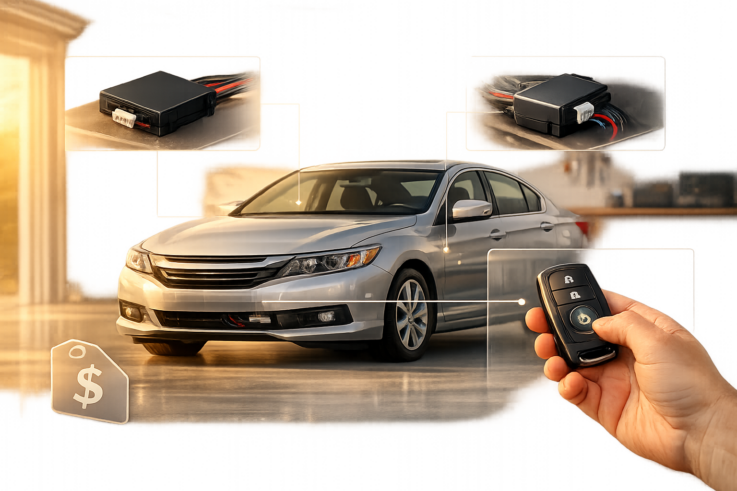
A remote car starter offers the convenience of starting your car from a distance, letting you warm it up in winter or cool it down in summer. In 2026, the cost of a professionally installed remote starter ranges from $350 to $600. Here’s a quick breakdown:
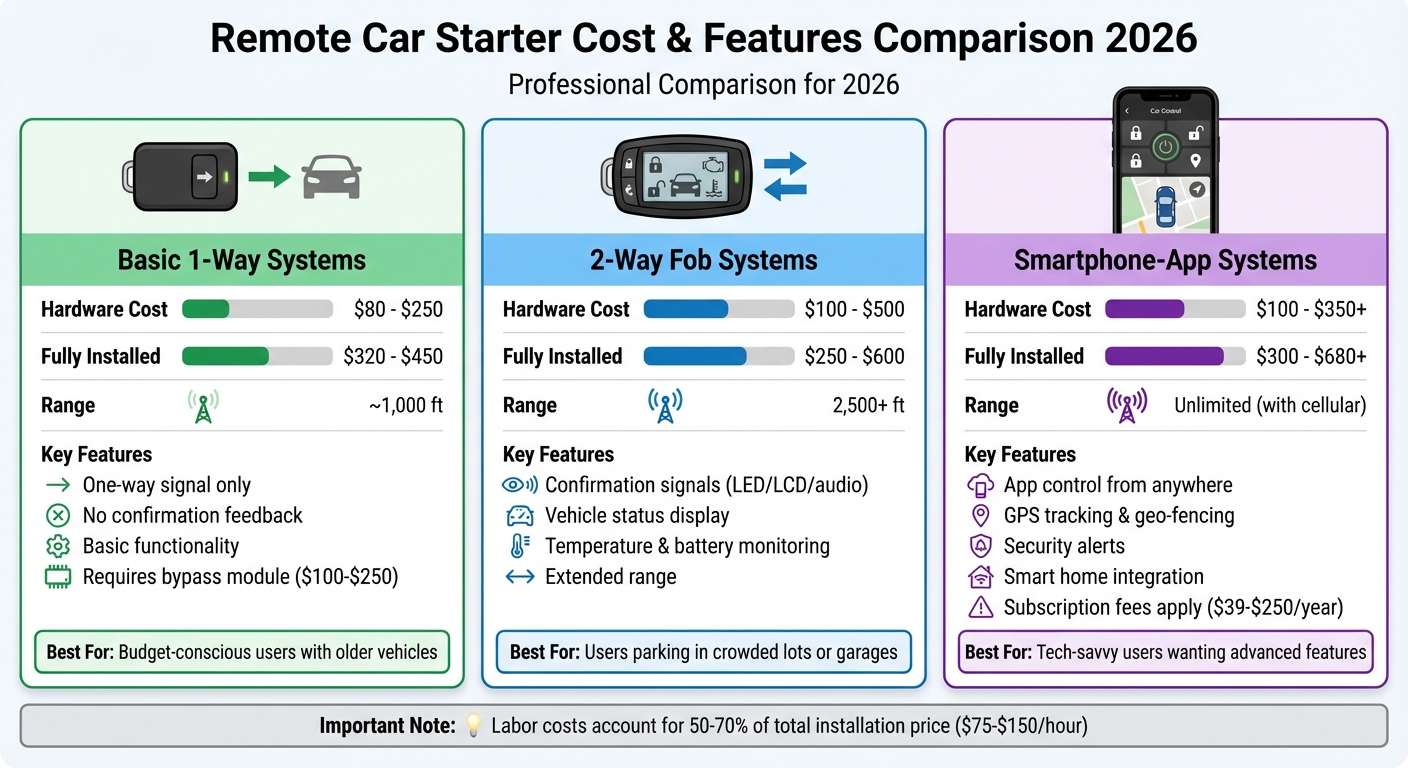
Basic 1-Way Systems: $320–$450 installed. Limited to one-way signals, ~1,000 ft range.
2-Way Fob Systems: $250–$600 installed. Provides confirmation signals, up to 2,500+ ft range.
Smartphone-Controlled Systems: $300–$680+ installed. Unlimited range via app but may include subscription fees.
Labor makes up 50–70% of the total cost, with hourly rates between $75 and $150, depending on vehicle complexity and location. Additional costs like bypass modules ($50–$200) and T-harnesses ($30–$150) may apply, especially for modern or luxury vehicles. Professional installation is highly recommended to avoid damaging your car’s electronics or voiding warranties.
How Much Does It Cost To Install Remote Start? – LearnToDIY360.com
sbb-itb-74b4b25
Costs by Remote Starter Type
Remote Car Starter Types: Cost Comparison and Features Guide 2026
The type of remote starter you select plays a big role in determining your overall cost. Each option comes with its own set of features, so it’s worth understanding what you’re paying for to avoid overspending on unnecessary extras – or cutting corners and regretting it later. Here’s a closer look at the costs and features of different remote starter types, along with factors affecting installation.
Basic 1-Way Systems
Basic 1-way systems are the most straightforward option, with hardware costs ranging from $80 to $250. However, most vehicles with factory anti-theft systems will require a bypass module, which adds another $100 to $250. That brings the fully installed cost to around $320 to $450.
These systems send a signal in only one direction – from your remote to the car – so you won’t get confirmation that your engine has started. The average range is about 1,000 feet, though some factory-installed options may have much shorter ranges, sometimes as little as 50 feet.
"If you’re a typical user, you don’t need to overthink this. A basic system under $400 works well for older vehicles without push-button start." – Andre Silva, Author, Alibaba
If you’re considering a budget kit, make sure it includes the bypass module, as skipping this part can lead to functionality issues. To avoid surprises, ask for an itemized breakdown of parts and labor.
For those who want added features like confirmation signals, upgrading to a 2-way fob system might be worth considering.
2-Way Fob Systems
2-way fob systems take things a step further by providing confirmation – via LED lights, LCD screens, or audio signals – that your car has successfully started. Hardware costs for these systems typically fall between $100 and $500, with fully installed prices ranging from $250 to $600.
These systems are especially handy if you park in places where you can’t easily see your car, like crowded lots or multi-level garages. Many models also come with an LCD display that shows details like vehicle status, temperature, and battery voltage. Additionally, the range is significantly better than basic systems, often reaching 2,500 feet or more.
Smartphone-App Based Systems
Smartphone-app systems take the convenience of 2-way fobs and add even more advanced features. These premium setups typically cost $100 to $350+ for hardware, with fully installed systems priced between $300 and $680+. LTE-based systems offer virtually unlimited range, provided you have a cellular signal, so you can start your car from almost anywhere.
However, keep in mind that LTE systems often come with recurring subscription fees. If you’re looking to avoid those, Bluetooth-based options like the MoboKey Pro – priced at $120 to $160 – offer a subscription-free alternative, though they’re limited to Bluetooth range.
These systems are ideal for users who need advanced features like geo-fencing, vehicle tracking, or smart home integration. But if you just want to warm up your car in the driveway, this might be overkill.
System Type
Hardware Only
Fully Installed
Key Features
Basic 1-Way
$80 – $250
$320 – $450
No confirmation; ~1,000 ft range
2-Way Fob
$100 – $500
$250 – $600
Confirmation signal; up to 2,500+ ft
Smartphone-App
$100 – $350+
$300 – $680+
Unlimited range; app control; may require subscription
Installation Costs and Labor Factors
Professional installation can account for a hefty 50-70% of the total cost by 2026. Knowing what influences these costs is key to planning your budget.
The complexity of the installation plays a major role in both time and expense. For example, installing a remote starter in an older vehicle with a traditional key might only take 1 to 2 hours, with labor costs ranging from $75 to $200. On the other hand, luxury vehicles with advanced push-to-start systems and encrypted anti-theft features can require 3 to 5+ hours of work, costing anywhere from $250 to $600 or more. Labor rates also vary by region – shops on the West Coast typically charge $100 to $140 per hour, while installers in the Midwest may charge $80 to $100 per hour. These differences highlight how both vehicle complexity and local market conditions affect installation costs.
"A professional installation is your insurance policy against costly electrical nightmares." – Carmedics Autowerks
Certified installers with MECP or ASE certifications are trained to handle intricate digital systems, which is reflected in their labor rates. These costs often include additional hardware requirements specific to your vehicle.
Vehicle Type and Compatibility
Your vehicle’s make, model, and year are critical factors in determining installation costs. Luxury brands like BMW, Mercedes-Benz, and Audi often come with complex computer systems and encrypted anti-theft measures that demand advanced programming and longer labor times. For instance, installing a remote starter in a Honda Civic might cost $150 to $300, whereas luxury models could easily push costs to $300 to $600 or more.
Push-to-start ignition systems add another layer of complexity. These systems require specialized interface modules and extended installation times compared to traditional keyed ignitions. Manual transmission vehicles are even trickier – they need safety features like neutral safety switches and clutch bypasses to prevent accidental starts while in gear. Some installers avoid working on manual vehicles altogether due to liability concerns.
"The electronic ‘nervous system’ of a 2022 BMW 3 Series is a world apart from a 2015 Honda Civic, and the installation process has to account for that difference." – Carmedics Autowerks
Additional Hardware and Integration
The cost of installation isn’t limited to just the remote starter unit. Additional components like bypass modules and T-harnesses can add to the overall expense. Bypass modules, essential for many modern vehicles, range from $50 to $200, with higher-end options for luxury cars. Programming these modules may add another $50 to $100.
Vehicle-specific T-harnesses, priced between $30 and $150, can simplify installation by allowing plug-and-play connections. These harnesses also help protect your vehicle’s factory wiring, which is crucial if you want to maintain your warranty. If you’re considering other electrical upgrades like a car alarm or stereo system, combining them with your remote starter installation can save you money since the dashboard will already be disassembled.
Installation Complexity
Estimated Time
Typical Labor Cost
Vehicle Characteristics
Simple
1–2 Hours
$75 – $200
Older vehicles; mechanical keys; no immobilizer
Moderate
2–3 Hours
$150 – $300
Modern vehicles; keyless entry; no push-button start
High
3–5+ Hours
$250 – $600+
Smart fobs; push-to-start; CAN bus; encrypted anti-theft
Advanced Features and Their Costs
Beyond the type of system and installation variables, advanced features can significantly influence your total investment. While basic systems focus solely on starting your engine, these enhanced options add extra layers of convenience and security – often at a higher price.
Extended Range and 2-Way Communication
Opting for 2-way communication provides confirmation that your engine has started through features like LEDs, beeps, or LCD displays. Advanced FM systems also boost range, extending it from about 1,000 feet to over 2,500 feet. However, these upgrades come at a cost. The hardware for advanced 2-way units is pricier, and replacing components like LCD fobs can also be more expensive.
Smartphone Integration and Telematics
Smartphone-based systems take remote start to the next level, offering virtually unlimited range as long as both your phone and vehicle have cellular service. These systems require a cellular module, which typically adds $100 to $200+ to your hardware costs. Modules alone generally range between $100 and $150.
In addition to the hardware, these systems often involve subscription fees. For luxury brands, annual fees can climb as high as $250, while aftermarket systems typically charge around $39 per year. Despite the recurring costs, these systems provide valuable features like GPS tracking, battery voltage monitoring, security alerts, and geo-fencing. Many kits include the first year of service to help offset upfront costs. For example, the DroneMobile XC Dash Cam bundle combines LTE connectivity with interior cameras, allowing you to monitor your vehicle’s surroundings directly from your smartphone. This bundle is priced at approximately $379.99.
"Smartphone-controlled systems… do come at a premium price and usually require a subscription fee for the cellular service that keeps them connected." – Carmedics Autowerks
Additional costs, such as bypass modules ($50–$200), may also apply when integrating smartphone-based features. Skipping these modules can lead to unexpected expenses down the line. Additionally, if you let your service plan lapse for more than a year, some SIM cards may be permanently deactivated, requiring new hardware. These advanced options emphasize the need to balance your desired features with both your budget and your vehicle’s compatibility.
2026 Market Pricing Examples
Let’s look at how pricing trends are shaping up for 2026, building on the cost factors discussed earlier.
Authorized Dealer Pricing
When buying from authorized dealers, pricing often includes both the hardware and professional installation. Justin Lee from Compustar explains:
"A basic, short-range remote starter installed on a non-luxury vehicle will range from $349.99-$449.99"
If you’re only purchasing hardware, prices typically range from $50 to $230, but remember, this doesn’t include bypass modules or installation labor, both of which are essential. For instance, high-end options like the iDatastart HC4.5 retail for approximately $229.99 just for the hardware. Other examples, such as the Viper LC3 4706V and Prestige APS997Z, start at around $106.41, showcasing the variety available in the market.
Authorized dealers generally advise customers to buy and install their systems at the same location. This ensures warranty coverage for both the hardware and installation labor. However, keep in mind that factors like luxury vehicles, manual transmissions, or diesel engines can increase the final cost due to the need for specialized integration. These examples provide a baseline for understanding how discounts can further adjust pricing.
Seasonal and Promotional Discounts
Seasonal and promotional offers can significantly impact the final cost. For example, some promotions bring installed system prices down to as low as $199.99. However, these deals often don’t include bypass modules, which are required for most modern vehicles.
Demand tends to spike during late Q3 and early Q4, fueled by "Get Ready for Winter" campaigns. More recently, promotions have also focused on systems with enhanced cooling features. Additionally, some installers offer discounts for multiple vehicles or referrals, which can further reduce costs.
To get the most accurate quote – including all necessary hardware and labor – make sure to provide your vehicle’s year, make, and model when contacting a retailer. These seasonal deals and promotional packages add flexibility to the budgeting process, making it easier to plan for your purchase.
Conclusion
Choosing the right remote car starter in 2026 means balancing your vehicle’s specific needs, the features you want, and the importance of professional installation. For most vehicles, the cost of a professionally installed remote starter typically falls between $350 and $600, though luxury models or more intricate systems can push that price higher. Labor alone often makes up 50% to 70% of the total cost, highlighting why professional installation is so critical.
The make, model, and year of your vehicle play a big role in determining the final price. Many modern vehicles require a bypass module to work with factory security systems, and this component may not always be bundled into the base price. If you drive a luxury vehicle or one with a manual transmission, expect higher costs due to the added complexity.
For the best results, purchase and install your remote starter at the same location. This ensures full warranty coverage and proper integration with your car’s systems. Make sure the installer is certified by MECP or ASE and provide them with detailed information about your vehicle – like its year, make, and model – to get an accurate, itemized quote. As Justin Lee from Compustar puts it:
"Always make sure you purchase and install your remote starter at the same location."
Your parking habits should also guide your choice. If your car is usually within sight, a basic one-way system might suffice. But for those who park in large lots or multi-story garages, a two-way system or a smartphone-based option can provide extra peace of mind. Keep in mind, though, that app-based systems often come with recurring subscription fees.
Lastly, check whether your vehicle supports a T-harness installation. These plug-and-play adapters not only protect your car’s factory wiring but can also make the installation process faster and smoother.
FAQs
What are the benefits of a smartphone-controlled remote starter?
A smartphone-controlled remote starter brings several perks that have made it a go-to choice for many. One standout advantage is convenience – you can start your car directly from a smartphone app, skipping the need for a physical remote or key fob. This means you can fire up your engine from inside your house, office, or even from greater distances, depending on the system’s range.
Another big plus is the availability of advanced features like climate control and scheduling. Imagine stepping into a car that’s already warm on a freezing winter morning or cool during a sweltering summer day – all thanks to pre-set options. Many systems also offer real-time notifications, confirming the engine has started or alerting you to any issues, giving you added control and reassurance. Plus, these systems are often built to work smoothly with modern vehicles, making it simpler to install or upgrade as cars evolve.
How do vehicle type and location affect the labor cost of installing a remote car starter?
Labor costs for installing a remote car starter depend on factors like your vehicle’s complexity and your location. Newer models or luxury cars often come with advanced electrical systems, requiring more time and skill, which can drive up labor charges. Similarly, older vehicles with intricate wiring might also lead to higher installation costs.
Where you live matters too. Labor rates vary across the U.S., with urban areas generally charging more due to higher living expenses and wages. On average, you can expect labor costs to fall between $85 and $160, though this can vary based on your vehicle and the technician’s expertise. For a precise quote, it’s best to consult a professional installer familiar with your car and area.
Do smartphone-based remote car starters have any ongoing costs?
Most smartphone-based remote car starters typically don’t involve ongoing costs after the initial purchase and installation. That said, certain models might include extra features like GPS tracking or extended range capabilities, which could come with subscription fees or require periodic updates. Be sure to review the product details carefully to identify any possible additional charges.
To schedule an appointment with your friendly neighborhood experts at Car Repair Services, give us a call at +1 718-470-2223 or fill out the form below with your information and requested services. One of our team members will get back to you as soon as possible to confirm your appointment.
mailing list to receive updates on new arrivals, offers and other discount information.
We use cookies to ensure that we give you the best experience on our website. If you continue to use this site we will assume that you are happy with it.Ok