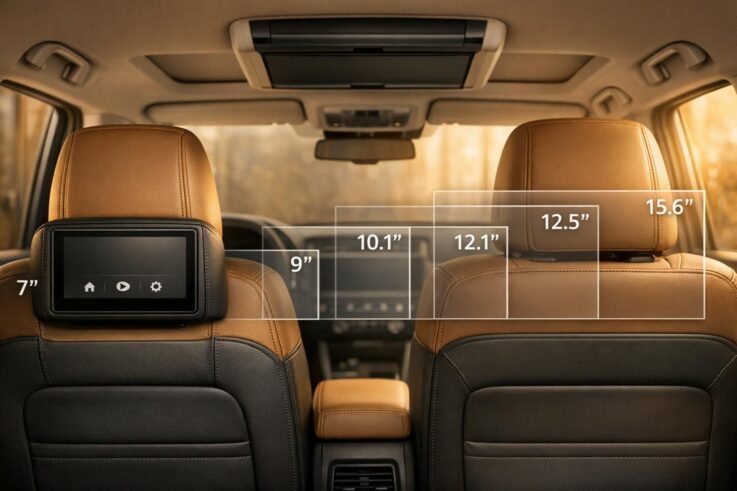
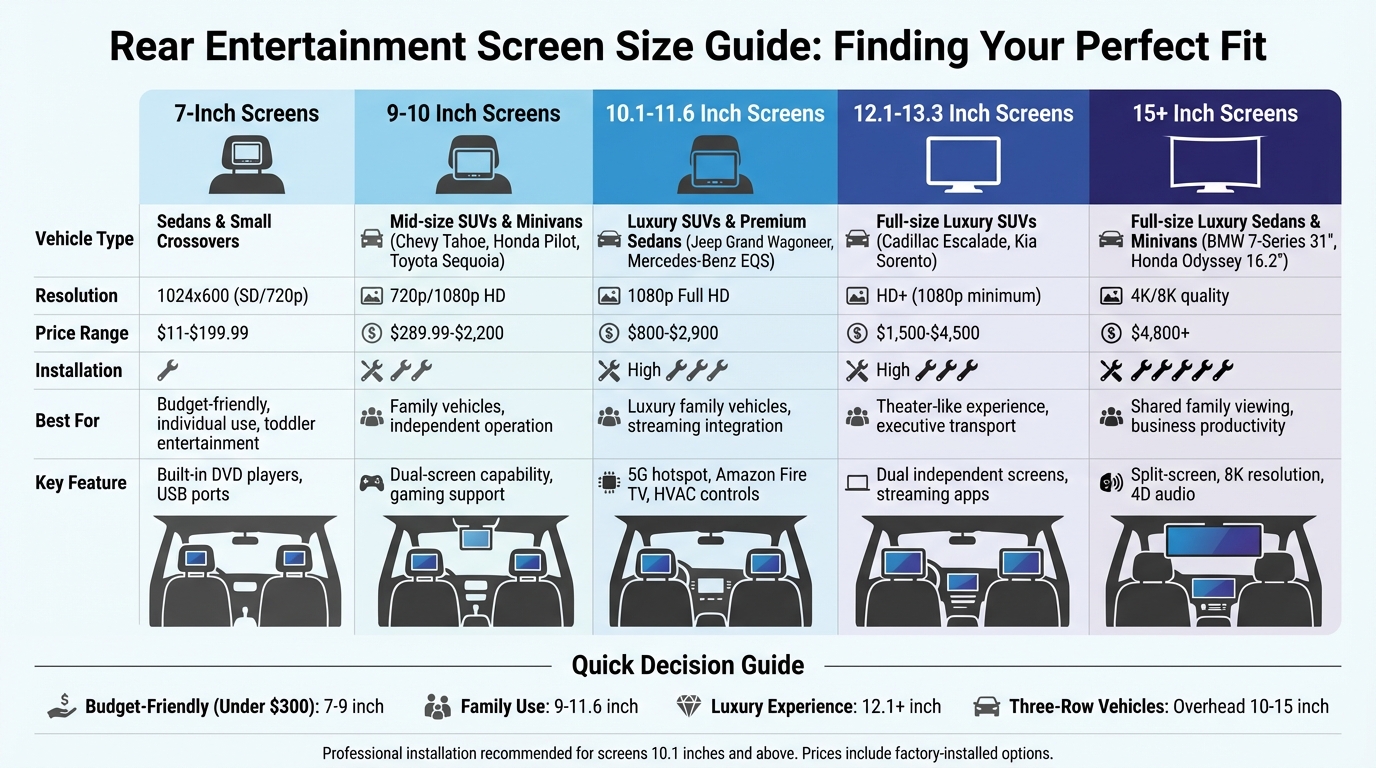
Rear entertainment screens are now a must-have for families and travelers, offering features like streaming apps, high-resolution displays, and more. Choosing the right size depends on your car type, passenger needs, and how you plan to use the system. Here’s a quick breakdown:
7-Inch Screens: Compact and affordable, ideal for sedans or small crossovers. Best for individual use with basic features like built-in DVD players.
9 to 10-Inch Screens: Great for SUVs and minivans. Offers HD resolution, supports independent operation, and works well for families with varying preferences.
10.1 to 11.6-Inch Screens: Found in luxury vehicles, these provide sharper visuals, streaming capabilities, and additional functionality like seat control.
12.1 to 13.3-Inch Screens: Perfect for spacious SUVs and luxury cars. Delivers a theater-like viewing experience with HD+ resolution.
15-Inch and Larger Screens: Designed for full-size SUVs and executive vehicles, these massive displays (up to 31 inches) offer 4K or 8K quality and advanced features like split-screen viewing.
Key Takeaway: Smaller screens (7–10 inches) are budget-friendly and practical for individual use, while larger screens (10.1 inches and above) are better for luxury vehicles and shared entertainment. Proper installation is essential for safety and optimal performance.
Rear Entertainment Screen Size Comparison Guide for Cars
1. 7-Inch Screens
Compatibility with Vehicle Size and Layout
7-inch screens are designed to fit seamlessly into vehicles with standard headrest poles, making them compatible with most sedans and crossovers. Their compact size and tool-free mounts ensure they don’t obstruct the rearview mirror, which is especially important in smaller vehicles. These screens are a practical and budget-friendly option for cars without factory-installed entertainment systems, offering a portable, do-it-yourself alternative.
For a more integrated appearance, you can replace the stock headrests with models like the Audiovox MTGHRD1. This 7-inch unit includes a built-in DVD player and HDMI ports and is priced around $199.99. If you prefer a temporary setup, the Kenu Airvue mount, priced at approximately $49.95, attaches directly to headrest poles and allows for easy screen rotation. For those on a tighter budget, options like the Moonooda Universal Holder start at just $11. These solutions provide flexibility and ease of use while ensuring a reliable viewing experience.
Viewing Experience (Resolution and Screen Size)
Most 7-inch screens use IPS panels with a resolution of 1024×600 and a 160° viewing angle. This setup delivers clear visuals, even for passengers seated off-center. However, the resolution can feel outdated compared to modern devices, which might make reading smaller text more challenging or cause mild eye strain. While marketed as "HD", the compact size of these displays makes them ideal for individual viewing, particularly in headrest-mounted setups. However, they are less effective for group viewing due to the limited screen size.
Best Use Cases
These screens are a great choice for families on a budget or commercial vehicles that need basic functionality, like navigation or backup camera displays. They’re especially useful for keeping children entertained during long road trips, reducing driver distractions and creating a more peaceful cabin environment.
"Automakers charge a lot of money for optional rear-seat entertainment systems, with prices ranging up to thousands of dollars. But if you’ll only be entertaining the backseat passengers (kids) once in a while… there are much less expensive alternatives: do-it-yourself systems." – Suzanne Kantra, Techlicious
With features like built-in DVD players, USB ports, and SD card slots, 7-inch screens offer an affordable entry-level solution compared to factory-installed systems, which can cost anywhere from $1,400 to $2,200. For families that only need occasional entertainment, pairing these screens with wireless headphones can ensure the driver isn’t distracted by backseat audio.
sbb-itb-74b4b25
9 to 10-Inch Screens
Compatibility with Vehicle Size and Layout
Screens in the 9 to 10-inch range are a go-to choice for mid-to-large SUVs, minivans, and luxury sedans. They fit seamlessly into various mounting setups. Seat-back mounting is a popular option in models like the 2023 Jeep Grand Wagoneer and Dodge Durango, where the screens attach to the back of front-row headrests, offering passengers a personalized viewing experience. Ceiling-mounted flip-down systems are commonly found in minivans such as the 2023 Honda Pilot. These setups provide visibility for both second- and third-row passengers while saving space. For instance, the Honda Pilot‘s 10.2-inch overhead system enhances sightlines and helps reduce motion sickness compared to headrest-mounted alternatives.
Viewing Experience (Resolution and Screen Size)
A 10-inch HD touchscreen is often the sweet spot for an enjoyable viewing experience. At this size, passengers can comfortably watch content from about 2 feet away without straining their eyes. Most systems in this category deliver at least 720p HD resolution, ensuring sharper and more detailed visuals compared to smaller 7-inch screens. Additionally, these systems usually support independent operation, allowing each screen to play different content simultaneously – a lifesaver for families with kids who have varying preferences.
Installation Complexity and Modification Requirements
Factory-installed systems offer a polished look and integrate seamlessly with the vehicle’s electrical system, often covered under the manufacturer’s warranty. For example, the Jeep Grand Wagoneer’s Rear-Seat Entertainment Group, priced around $2,200, includes professional installation with no visible wiring. On the other hand, DIY options like the Naviskauto dual 10.1-inch system ($289.99) are designed to attach to existing headrest poles but may leave cables exposed, running to the 12V outlet. Overhead installations are more complex, requiring professional work to cut and restructure the headliner for secure mounting to the roof support.
Best Use Cases
These screens shine when it comes to keeping kids entertained during road trips with movies, games, or streaming apps. This not only keeps children engaged but also reduces driver distractions, creating a more relaxed cabin environment. For vehicles with three rows, a single 9-inch ceiling-mounted screen offers better visibility for all rear passengers. Meanwhile, dual-screen seat-back setups are perfect for families where passengers want to enjoy different content – one child might play a game via HDMI while another streams a favorite show. The combination of clear visuals and flexible installation options makes 9 to 10-inch screens a top choice for family vehicles. Auto Sound & Security provides expert installation services, offering both factory-style setups and custom aftermarket solutions from trusted brands like Pioneer, Kenwood, and Alpine, tailored to your vehicle’s design.
3. 10.1 to 11.6-Inch Screens
Compatibility with Vehicle Size and Layout
Screens measuring between 10.1 and 11.6 inches are a great fit for mid-sized SUVs, luxury sedans, and premium minivans. Take the 2023 Jeep Grand Wagoneer, for example – it comes equipped with dual 10.1-inch seatback screens as part of its Rear-Seat Entertainment Group package. Similarly, the 2023 Mercedes-Benz EQS includes 11.6-inch touchscreens integrated into its advanced MBUX system, offering a sleek and functional solution for rear-seat entertainment.
Viewing Experience (Resolution and Screen Size)
These displays deliver a more engaging viewing experience compared to smaller screens. Most models in this size range boast at least 720p HD resolution, with some, like the Jeep Grand Wagoneer, supporting full 1080p for crystal-clear visuals and vibrant colors. Systems like those in the Mercedes-Benz EQS enhance the experience further by enabling independent operation for each screen and offering integration with 5G hotspots and streaming platforms like Amazon Fire TV. This eliminates the need for physical media and ensures smooth access to entertainment. However, proper installation is key to maximizing the performance of these high-quality displays.
Installation Complexity and Modification Requirements
Installing these systems requires professional expertise to ensure secure mounting and seamless integration with the vehicle’s electrical system. Ceiling-mounted units, for instance, often involve modifications to the headliner to create a stable base. Factory-installed options, like the Jeep Grand Wagoneer’s Rear-Seat Entertainment Group (around $2,200) or the Mercedes-Benz MBUX system (around $2,900), come with the added benefits of warranty coverage and flawless integration. For those opting for aftermarket solutions, Android-based systems with Wi-Fi typically range from $800 to $1,500. It’s crucial to ensure that installations do not interfere with features like sunroofs or airbag deployment zones.
Best Use Cases
These screen systems shine in luxury family vehicles and executive transport, where a high-end rear-seat entertainment setup is often expected. In models like the Mercedes-Benz EQS, the 11.6-inch touchscreens go beyond entertainment, allowing passengers to adjust HVAC settings or control seat functions directly. For families, especially on long road trips, these systems can keep passengers entertained while minimizing distractions for the driver. Some setups even integrate with navigation systems to provide real-time trip updates, adding a practical touch. This size range strikes a perfect balance for those seeking premium entertainment without the bulk of oversized screens. Auto Sound & Security specializes in professional installation for both factory-style and custom aftermarket systems, partnering with trusted brands like Pioneer, Kenwood, and Alpine to ensure a smooth and reliable setup tailored to your vehicle.
4. 12.1 to 13.3-Inch Screens
Compatibility with Vehicle Size and Layout
Screens in the 12.1–13.3-inch range are a great match for full-size luxury vehicles and higher-trim SUVs, especially those with spacious interiors. For instance, the 2023 Cadillac Escalade comes equipped with dual 12.6-inch touchscreens as standard on its Platinum and Sport Platinum trims. Similarly, the 2023 Kia Sorento offers a 12.3-inch screen in its top-tier models. These screens are typically mounted on the back of front-row headrests rather than on the ceiling, as their size can make ceiling mounting impractical. However, in smaller vehicles, their bulk might limit rear legroom, so careful consideration is necessary.
Viewing Experience (Resolution and Screen Size)
Screens in this size category deliver an almost "theater-like" experience for passengers in the back seat. For example, the Cadillac Escalade’s 12.6-inch displays support HD streaming, HDMI inputs, and even allow passengers to watch different content on each screen. To ensure crisp visuals, especially at close distances, a resolution of at least 1080p is recommended for screens 12 inches or larger. Additionally, modern systems are moving away from physical media, favoring built-in streaming apps like YouTube, Hulu, and YouTube Kids. Many of these systems also include 5G hotspot capabilities to handle high-bandwidth applications seamlessly. As one expert puts it: "12+ inches preferred for immersive content".
Installation Complexity and Modification Requirements
Installing these larger screens often requires professional expertise due to the complexity of the wiring and potential structural adjustments. For example, overhead flip-down monitors may necessitate modifications to the vehicle’s headliner to create a secure mounting point, rather than simply attaching the unit to the fabric. It’s also important to confirm that the vehicle’s electrical system can handle the additional power demands of these screens. When considering aftermarket options, ensure compatibility with your vehicle’s AV interfaces to avoid needing extra adapters. Factory-installed systems typically cost between $1,500 and $4,500, while premium aftermarket setups range from $800 to $1,500. Companies like Auto Sound & Security specialize in professional installations, using trusted brands like Pioneer, Kenwood, and Alpine to ensure seamless integration without sacrificing safety or comfort.
Best Use Cases
These screens are ideal for luxury family vehicles and executive transport, where providing a high-end entertainment experience is a priority. On long trips, their ability to stream different content on separate screens keeps passengers entertained and prevents disputes over what to watch. If the system is for family use, it’s wise to select models with robust parental controls, such as time limits and content filters, to ensure a safe and enjoyable experience for younger passengers.
5. 15-Inch and Larger Screens
Compatibility with Vehicle Size and Layout
When it comes to 15-inch and larger screens, these are designed with full-size luxury sedans, minivans, and large SUVs in mind. Think of vehicles like the BMW 7-Series or the Honda Odyssey, which boasts a 16.2-inch display, or executive-style large SUVs built for comfort and entertainment. Due to their size, these screens are typically mounted on the ceiling or a partition, as they’re too large for standard headrest setups. However, it’s crucial to ensure the screen placement doesn’t interfere with the sunroof or rearview mirror. One of the standout benefits of ceiling-mounted screens is their visibility – all rear passengers, even those in the third row, can enjoy the display, unlike smaller, seat-back-mounted units that cater to individual viewers.
Viewing Experience (Resolution and Screen Size)
The BMW 7-Series takes things to the next level with its massive 31-inch "Theater Screen", featuring 8K resolution – currently the top offering in rear entertainment screens. Powered by Amazon Fire TV and supported by a 5G connection, this system ensures smooth streaming. To enhance the viewing experience, the vehicle automatically adjusts the environment by closing the window shades and sunroof when the screen is in use, ensuring optimal brightness and contrast.
Meanwhile, the Honda Odyssey’s 16.2-inch display brings its own unique features. It can split the screen to display two different programs at the same time, which is perfect for families with differing tastes. Plus, the "CabinTalk" feature allows the driver to communicate with passengers through their headphones, interrupting the program when needed. These systems often pair with advanced audio setups, such as the Bowers & Wilkins Diamond Surround Sound system, which includes 4D audio effects for a truly immersive experience.
Installation Complexity and Modification Requirements
Installing these large screens requires professional expertise due to the intricate ceiling mounting and integration into the vehicle’s systems. For instance, the BMW system includes smaller touchscreens in the rear door panels, enabling passengers to control the massive 31-inch display without needing to physically reach it. These systems are deeply tied into the vehicle’s wiring, making DIY installation risky. Improper handling could trigger warning lights from multiple Electronic Control Units (ECUs) and disrupt the car’s electronic systems. Professional installers ensure cables are routed neatly to maintain the car’s polished appearance. The BMW 31-inch Theater Screen, for example, comes with a price tag of around $4,800, emphasizing the need for expert handling during installation.
Auto Sound & Security specializes in integrating these systems, working with trusted brands like Pioneer, Kenwood, and Alpine to ensure seamless operation with your vehicle’s power and existing systems.
Best Use Cases
While installation can be challenging, these screens deliver unmatched entertainment experiences, especially in luxury family vehicles or executive transport like limousines and RVs. For business travelers, these large displays are increasingly being used as productivity tools, enabling video conferencing or document viewing during commutes. Families on long road trips also benefit from the ability to stream different content simultaneously, keeping everyone entertained and avoiding arguments over what to watch. These setups are perfect for anyone looking to bring a true home-theater experience on the road.
Luxury BMW 7 Series 31-INCH 8K Backseat Screen
Screen Size Comparison Table
Here’s a quick reference table summarizing rear screen sizes, detailing vehicle compatibility, viewing quality, installation difficulty, and their best use cases:
Mid-size SUVs like Chevy Tahoe, Honda Pilot, and Toyota Sequoia
High (720p/1080p)
Moderate (Integrated)
Ideal for gaming or DVD playback for individual passengers
10.1–11.6 Inch
Luxury SUVs and EVs like the Jeep Grand Wagoneer (10.1") and Mercedes-Benz S-Class (11.6")
Premium (1080p HD)
High (Factory-fit)
Perfect for streaming apps and independent passenger controls
12.1–13.3 Inch
Full-size luxury SUVs like the Cadillac Escalade Platinum (12.6")
Ultra-High (HD+)
High (Factory-fit)
Designed for an immersive cinematic experience in spacious cabins
15-Inch+
Minivans like Honda Odyssey (16.2") and executive sedans like BMW 7-Series (31")
4K/8K quality
Very High (Ceiling/Retractable)
Great for shared family viewing or productivity on the go
This table simplifies the decision-making process, helping you find the right rear entertainment setup for your vehicle.
Pricing varies widely, starting at around $300 for basic aftermarket kits and reaching up to $5,000 for high-end factory-installed options. For larger screens (10 inches and above), expect modern connectivity options like HDMI, USB-C, and Bluetooth. On the other hand, older 7- to 9-inch systems often rely on infrared headphones and RCA inputs. Be sure to check for the necessary ports if you plan to connect gaming consoles or streaming devices.
Auto Sound & Security partners with brands like Pioneer, Kenwood, and Alpine to professionally integrate these systems into your vehicle.
Conclusion
Selecting the right rear screen size means balancing your vehicle type with passenger needs. For sedans, headrest monitors between 7 and 11.6 inches often work well, maintaining a sleek interior look. Larger SUVs usually benefit from seatback screens in the 10.1 to 12.6-inch range. For vehicles with three rows, like SUVs and minivans, overhead monitors are a popular choice. In these cases, three-row SUVs typically use screens between 10 and 15 inches, while modern minivans sometimes go as large as 16.2 inches.
Screen resolution also plays a major role in the viewing experience. As Xclusive Autosound points out:
"Because headrest monitors are viewed just two feet from the eyes, pixel pitch and resolution tend to be more important than size."
This means a smaller, high-resolution screen can outperform a larger, low-resolution one. For screens 10 inches and larger, features like HDMI and USB-C connectivity are worth considering for added functionality.
Proper installation is equally important to ensure safety and durability. Overhead monitors, for example, need to be mounted to solid roof supports rather than just the headliner fabric. This ensures the unit stays securely in place over time.
Auto Sound & Security works with top brands like Pioneer, Kenwood, and Alpine to provide systems that integrate seamlessly with your vehicle’s interior, matching OEM finishes for a polished look.
FAQs
How do I pick the right rear screen size for my car?
When picking the perfect rear screen size, think about your vehicle’s type and the distance from which it will be viewed. Headrest monitors usually fall between 7 to 10 inches, offering a compact option that fits seamlessly with the interior design. Overhead monitors, on the other hand, are generally between 10 and 12 inches, striking a good balance between visibility and convenience.
For larger vehicles, like SUVs, built-in screens often exceed 10 inches, providing a more engaging viewing experience for passengers. The key is to choose a size that complements your vehicle’s space while ensuring comfort for everyone on board.
What resolution is best for a rear screen?
A resolution of at least 1080p (Full HD) is ideal for rear screens. This level of clarity ensures crisp, detailed visuals, which is especially important for larger displays. It helps deliver a more enjoyable and immersive viewing experience.
Do I need professional installation for rear screens?
Professional installation is usually the best route for rear screens to guarantee a proper setup, safe operation, and peak performance. Systems like overhead monitors or headrest screens can be tricky to install, often requiring intricate wiring, secure mounting, and integration with your car’s existing systems. Experienced installers come equipped with the right tools and expertise to handle these tasks, minimizing the risk of damage or errors and ensuring everything functions smoothly.
To schedule an appointment with your friendly neighborhood experts at Car Repair Services, give us a call at +1 718-470-2223 or fill out the form below with your information and requested services. One of our team members will get back to you as soon as possible to confirm your appointment.
mailing list to receive updates on new arrivals, offers and other discount information.
We use cookies to ensure that we give you the best experience on our website. If you continue to use this site we will assume that you are happy with it.Ok