Window tinting isn’t just about style – it’s about making your drive safer, cooler, and more comfortable. Here’s why so many drivers choose it:
Cooler Interiors: Reduces cabin heat by up to 20°F, cutting down on AC use and improving fuel efficiency.
Glare Reduction: Minimizes eye strain by blocking up to 95% of harsh light and reflections.
UV Protection: Blocks 99% of harmful UVA/UVB rays, safeguarding your skin and car interior.
Privacy and Security: Protects valuables inside your car and reinforces window strength.
Interior Preservation: Prevents fading, cracking, and damage to seats, dashboards, and plastic components.
High-quality ceramic films offer the best performance, ensuring a cooler, safer, and more energy-efficient ride. Professional installation is key for optimal results and compliance with local laws.
Ceramic window films can block up to 80% of solar heat and nearly 100% of infrared rays, which are the primary culprits behind overly hot car interiors. This means your car’s cabin can remain up to 20°F cooler compared to one without tinting.
Without protection, surfaces like the steering wheel, dashboard, and leather seats can become unbearably hot in just minutes. Window films work by blocking infrared radiation before it enters the vehicle, keeping these surfaces cooler. Research from the American Automobile Association (AAA) shows that cars with 20% Visible Light Transmission (VLT) tint experienced an average cabin temperature drop of 18°F after an hour in the sun.
A cooler interior doesn’t just mean comfort – it also reduces air conditioning usage, which can lower fuel consumption by up to 20% during hot weather. In heavy summer traffic, AC systems can account for 25–27% of overall fuel use. By reducing cabin heat, window tinting can improve fuel efficiency by 2–3%. For electric vehicles, this means less battery drain from climate control, allowing for a longer driving range.
"By reducing the amount of heat that enters the vehicle, window tinting lessens the load on your car’s air conditioning system, promoting better fuel efficiency." – Sunstopper Window Tinting
For the best heat-blocking performance, opt for ceramic or nano-ceramic films instead of standard dyed tints. These advanced films provide superior infrared rejection while avoiding interference with GPS, cell signals, or radio reception. Additionally, consider the Solar Heat Gain Coefficient (SHGC) when choosing a tint – a lower SHGC value indicates better heat rejection.
2. Less Glare and Reduced Eye Strain
Did you know that glare is responsible for over 90% of driving-related eye strain? Whether it’s the low-angle sunlight during sunrise and sunset, reflections off wet roads, or the blinding glare of oncoming headlights at night, tinted windows can make a massive difference. By filtering harmful light, window tint helps ease eye strain, making every drive more comfortable.
Here’s how it works: window tint absorbs and reflects incoming light. Standard films can reduce glare by up to 60%, while high-performance ceramic films take it even further, cutting glare by 85–95%. This means fewer intense reflections from wet pavement, water, or other vehicles that can cause those blinding bright spots.
"Window tinting acts like sunglasses for your car. It filters out the harsh sunlight and reduces the amount of light that enters through your windows." – Window Kote Blogger, Window Kote of Largo
Tinting doesn’t just reduce glare; it also stabilizes the light levels inside your car. This keeps your pupils from constantly adjusting as you move between bright sunlight and shadows – one of the main culprits behind eye fatigue. With more consistent lighting, you’ll notice improved visual contrast, making road signs, lane markings, and potential hazards much easier to spot. In fact, drivers report 40% less squinting on sunny days. And that’s on top of other perks like UV protection.
For nighttime driving, ceramic tints strike a perfect balance. They filter out the harsh glare from oncoming headlights without darkening your view. Just make sure the tint you choose complies with local Visible Light Transmission (VLT) laws. Many areas require at least 70% VLT for front side windows to ensure clear visibility.
3. UV Protection for Skin Health
Did you know that standard car side windows only block about 44% of harmful UVA rays, while windshields do a much better job, blocking around 96%? This difference leaves passengers vulnerable to UVA radiation, which is linked to over 90% of skin cancer cases in the U.S.. In fact, studies show that 53% of skin cancer cases in the U.S. occur on the left side of the body, highlighting the risks of sun exposure while driving.
This is where high-quality window tinting comes in. Modern ceramic and nano-ceramic tints are designed with UV inhibitors and nano-ceramic particles, allowing them to block up to 99% of both UVA and UVB rays.
"Think of window tint as wearing SPF 1000 sunscreen that never needs reapplication, protecting every occupant simultaneously." – Joe DelGiorno, Tint Shop NC
The numbers are startling: drivers in the U.S. receive five times more UV exposure on their left arm and 20 times more on the left side of their face if their side windows aren’t treated. Tinted windows can reduce skin cell damage caused by UV rays by up to 93%. This isn’t just about preventing sunburn – tinting helps guard against long-term effects like wrinkles, sunspots, and even skin cancer.
When choosing a tint, look for films that block at least 99% of UVA and UVB rays. Ceramic and nano-ceramic options are particularly durable and won’t fade over time. Make sure to tint all windows to ensure everyone in the car is protected. For professional installation and reliable results, Auto Sound & Security (https://autosoundnyc.com) offers expert tinting services tailored to your needs.
4. Increased Privacy and Security
Window tinting does more than control temperature and reduce glare – it also enhances privacy and security, making driving more comfortable and secure. Tinted windows act as a shield, concealing valuables like laptops, shopping bags, or even passengers from prying eyes. Whether you’re stuck in traffic or parked in a crowded lot, this added layer of discretion can make a big difference.
In fact, data backs this up: cars with tinted windows experience 60% fewer break-ins compared to those without tinting, according to a 2024 study.
"Most car break-ins are crimes of opportunity – if thieves can’t see inside your car, they’re less likely to target it." – Revolution Auto Salon
Another benefit? The uncertainty created by darker tints. Criminals are less likely to approach a car when they can’t tell if someone is inside, further discouraging theft.
But privacy isn’t the only perk. High-quality window film adds an extra layer of security by reinforcing the glass. The adhesive holds shattered pieces together during break-in attempts, making it harder and noisier for burglars to gain access. Unlike alarms, which react to theft, tinted windows take a proactive approach by deterring break-ins before they happen.
Many drivers also appreciate the feeling of personal space that tinted windows provide. The reduced visibility from the outside means fewer distractions and a more focused driving experience.
"There’s comfort in knowing that your space is shielded from the outside world, extending beyond mere aesthetics." – Showroom Detailing
For those prioritizing security, choosing the right tint is key. Films with lower visible light transmission (VLT) levels – such as 20% for rear windows or 5% limo tint – offer greater privacy. Additionally, thicker, security-designated films provide even more protection. Companies like Auto Sound & Security offer professional tinting services tailored to meet both privacy and security needs. Just make sure to check your state’s VLT regulations before installation.
5. Interior Protection and Preserved Cabin Quality
Window tinting does more than just cut down on heat and glare – it’s like sunscreen for your car’s interior. Constant sun exposure can wreak havoc on your vehicle’s materials, causing fading, cracking, and brittleness. Window tint acts as a shield, protecting your cabin from these effects.
Without tint, UV rays and heat can quickly degrade your car’s interior. Leather seats can dry out and crack, dashboards may warp and fade, fabric upholstery loses its vibrancy, and plastic components become brittle. UV rays break down the synthetic materials, while extreme heat – often exceeding 130°F inside a parked car – speeds up the damage. High-quality tint films also reduce infrared heat, offering an added layer of protection.
"UV radiation doesn’t just damage your skin; it wreaks havoc on your vehicle’s interior materials. Leather cracks and fades, plastic components become brittle, and fabric upholstery loses its color vibrancy." – Precision Auto Styling
Keeping your interior in good condition also helps maintain your car’s resale value. A cracked dashboard or faded seats can signal neglect to potential buyers. Investing in ceramic or nano-ceramic films, which range from $400 to $900 for a sedan, can be a smart move. These films often come with lifetime warranties and can last over a decade.
For the best results, ceramic films are a top choice. They block heat effectively without interfering with GPS or phone signals, unlike some dyed films. If you’re considering professional installation, Auto Sound & Security offers services designed to protect your interior while ensuring compliance with state laws. To keep tinted windows in top shape, clean them with ammonia-free cleaners and a microfiber cloth to avoid damaging the film.
Comparison Table
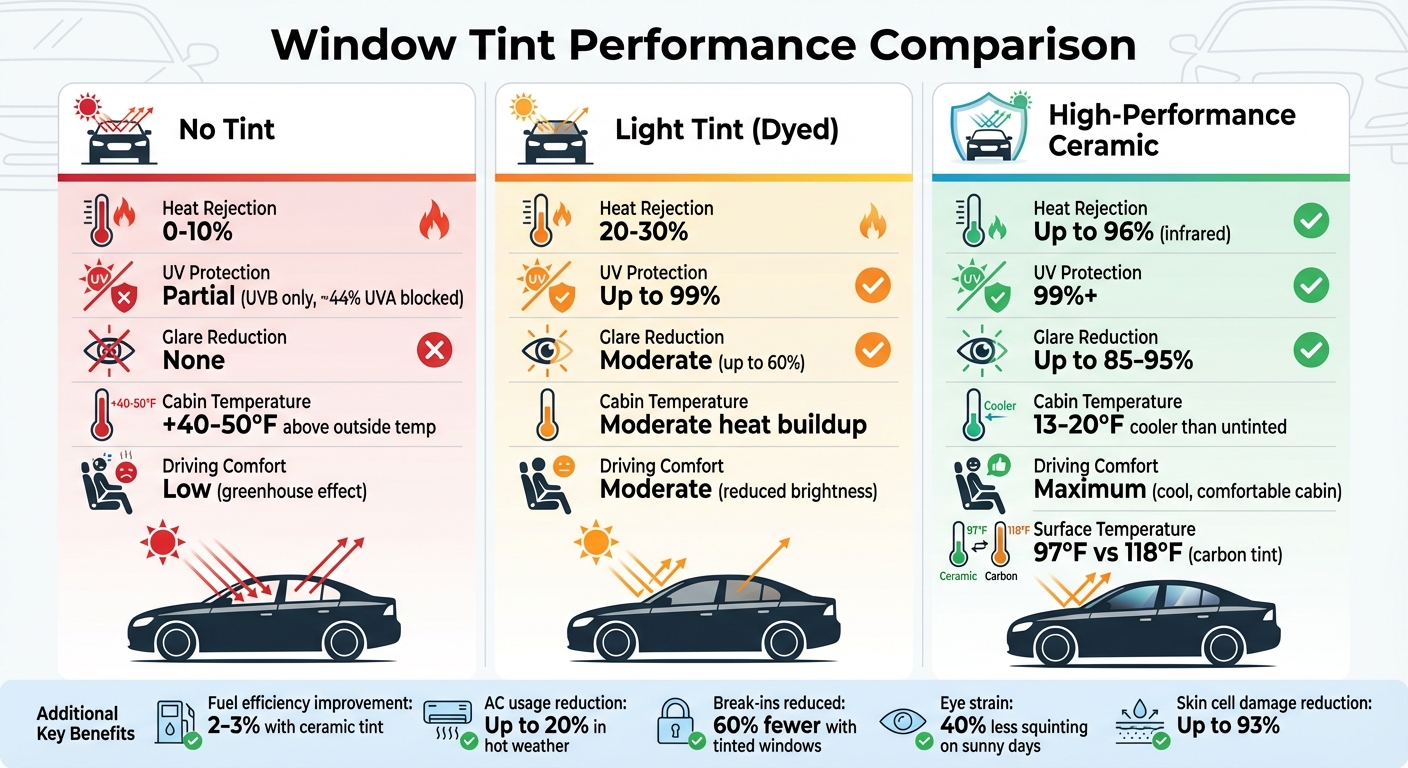
When it comes to driving comfort, the type of window tint you choose can make a huge difference. Each option, from no tint to high-performance ceramic films, has a unique impact on heat, glare, and UV protection. Let’s break it down.
No tint leaves your car vulnerable to the sun’s full force. Without any tint, your vehicle can become unbearably hot, with cabin temperatures rising 40 to 50°F above the outside temperature. This not only makes driving uncomfortable but also increases glare, heats up surfaces, and accelerates interior wear, like dashboard fading.
Light dyed tints are a step up. These tints can block up to 99% of UV rays when made with high-quality materials. However, they primarily absorb heat rather than deflect it, meaning some of that heat radiates back into the cabin. This results in heat rejection levels of about 20–30%.
High-performance ceramic films, on the other hand, deliver a noticeable improvement. These advanced tints can block up to 96% of infrared radiation and reject as much as 70% of total heat. Real-world tests show ceramic films keep cabin temperatures significantly cooler – about 13°F lower than carbon tints. Thermal studies also reveal that ceramic films maintain surface temperatures at 97°F, compared to 118°F with carbon tints – a difference of 21°F.
Here’s a quick comparison of these options:
Tint Option
Heat Rejection
UV Protection
Glare Reduction
Driving Comfort
No Tint
0–10%
Partial (UVB only)
None
Low (greenhouse effect)
Light Tint (Dyed)
20–30%
Up to 99%
Moderate
Moderate (reduced brightness)
High-Performance (Ceramic)
Up to 96% IR
99%+
Up to 85%
Maximum (cool, comfortable cabin)
While ceramic films come with a slightly higher price tag, their benefits are hard to ignore. They offer superior heat rejection, UV protection, and glare reduction, creating a cooler and more comfortable driving experience. For those who spend long hours on the road, this upgrade can mean less eye strain, a cooler cabin, and better protection for your car’s interior.
Conclusion
Window tinting improves driving comfort by cutting down on heat, glare, and UV exposure. It also offers added privacy and helps protect your car’s interior. Together, these benefits create a "cocoon effect", keeping the cabin cooler, reducing eye strain, and providing a sense of comfort – all of which can help reduce driver fatigue.
The advantages go beyond comfort. High-quality window tint enhances safety by shielding passengers from harmful UV rays, offering protection comparable to SPF 285. It also strengthens glass, making it more resistant to shattering during accidents or break-ins. Plus, by keeping the interior cooler, tinted windows reduce the strain on your air conditioning system, which can lead to fuel savings of at least 5%.
"Window tinting is an investment in your car’s safety, comfort, and longevity." – Mobile Tinters
For the best results, having your tint professionally installed is key. Skilled installers ensure compliance with state-specific Visible Light Transmission (VLT) laws and help prevent common issues like bubbling or peeling. Many premium films also come with warranties of up to 10 years, guaranteeing long-lasting performance.
If you’re ready to upgrade your driving experience with professional installation that meets all regulations, reach out to Auto Sound & Security (https://autosoundnyc.com).
FAQs
What tint level is legal in my state?
Most states have different rules when it comes to legal tint levels for car windows, typically allowing anywhere between 20% and 70% Visible Light Transmission (VLT) for front side windows. For instance, California mandates at least 70% VLT, while Texas permits 25%, and Michigan imposes no restrictions at all. To avoid fines or other issues, make sure to double-check the specific regulations in your state.
Will ceramic tint affect GPS or cell signal?
No, ceramic tint does not interfere with GPS or cell signals. Unlike metallic tints, which can disrupt radio waves, ceramic tint is made with non-metallic nanoparticles. This design ensures that your GPS and mobile devices maintain strong and reliable signal performance.
How long does window tint last?
Window tint can last anywhere from 5 to 20 years, and its durability largely depends on several factors. The quality of the film plays a major role, as higher-grade tints are designed to withstand wear and tear for longer periods. Professional installation is equally important, as improper application can lead to bubbling or peeling over time. Additionally, exposure to intense sunlight can shorten the lifespan, while consistent care and maintenance can help preserve its condition. With the right combination of quality materials and proper upkeep, you can enjoy long-lasting benefits like reduced heat and UV protection.
We use cookies to ensure that we give you the best experience on our website. If you continue to use this site we will assume that you are happy with it.