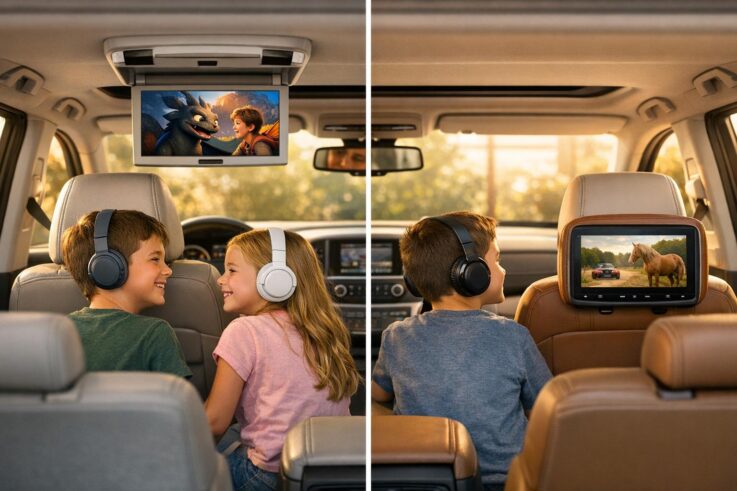
Single vs. Multi-Screen Rear Entertainment: Key Differences
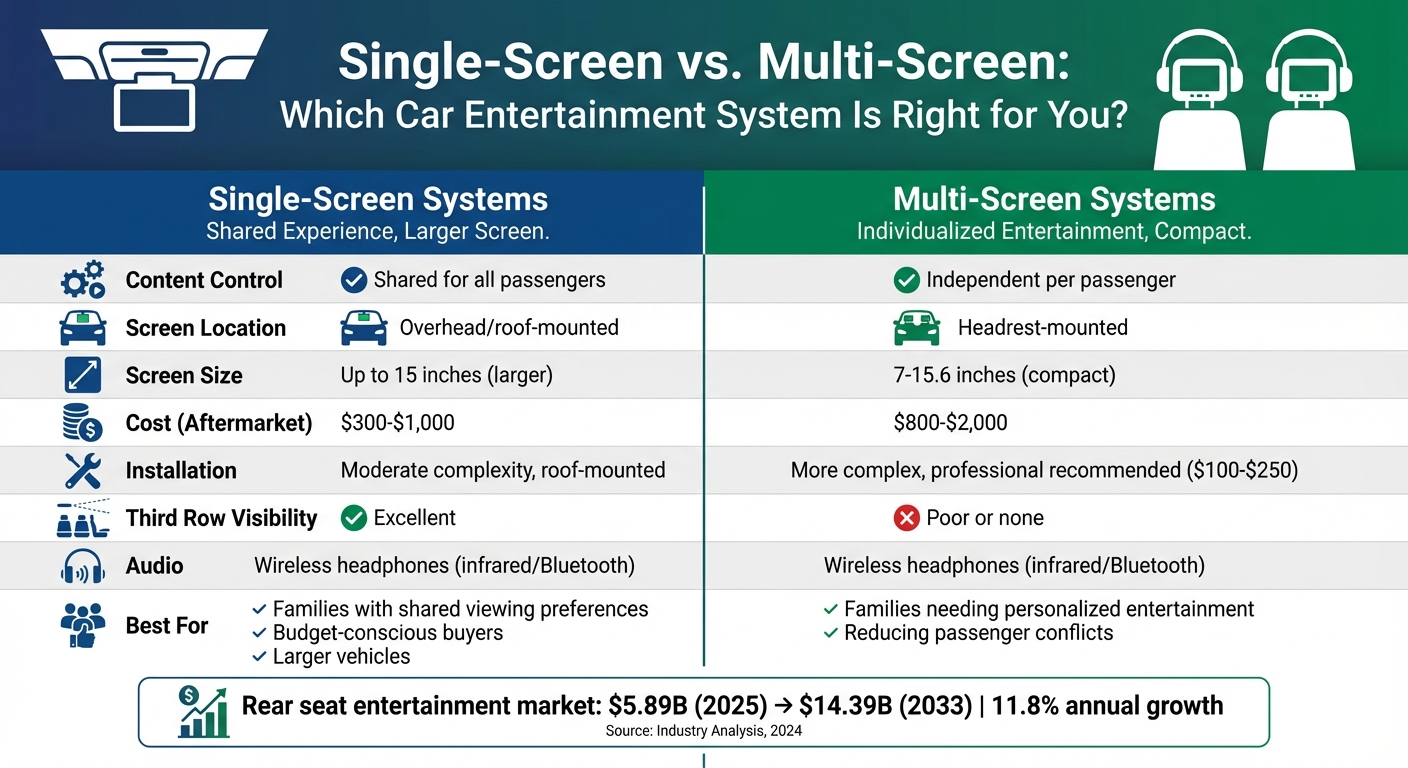
When choosing a rear entertainment system for your car, you have two main options: single-screen and multi-screen setups. Here’s a quick breakdown:
Single-Screen Systems: These feature one shared display, often roof-mounted, for all backseat passengers. They’re budget-friendly, simpler to install, and ideal for shared viewing during road trips. However, they lack individual content control, which can lead to disagreements over what to watch.
Multi-Screen Systems: These provide individual screens for each passenger, usually mounted on front-seat headrests. They allow personalized content choices, better viewing angles, and independent audio. They’re pricier and more complex to install but offer more flexibility.
Quick Comparison
Feature
Single-Screen Systems
Multi-Screen Systems
Content Control
Shared for all passengers
Independent per passenger
Screen Location
Overhead/roof-mounted
Headrest-mounted
Cost
$300–$1,000 (aftermarket)
$800–$2,000 (aftermarket)
Installation
Moderate complexity
More complex, professional recommended
Best For
Families with shared viewing preferences
Families needing personalized entertainment
Single-screen systems are great for simplicity and cost-effectiveness, while multi-screen setups are better for individual entertainment needs. Choose based on your budget, preferences, and how your family travels.
Single-Screen vs Multi-Screen Car Entertainment Systems Comparison
Why You and Your Family Need Rear Seat Entertainment | Dual Screen, Streaming, & App Control
sbb-itb-74b4b25
Single-Screen Rear Entertainment Systems
Single-screen rear entertainment systems simplify the in-car viewing experience by offering a shared display for all backseat passengers. These systems come in various setups, such as roof-mounted monitors that fold away when not in use, seatback or headrest displays integrated into the front seats, or bracket-mounted screens that attach to headrest posts without requiring permanent changes to the vehicle. Screen sizes typically range from 7 to 15 inches, with 10-inch screens being the most popular choice.
These systems usually include built-in DVD or Blu-ray players, as well as HDMI ports, USB slots, and SD card readers for added versatility. Audio is delivered through infrared wireless headphones or FM modulators, which broadcast sound through the car’s radio system.
Factory-installed systems, however, come with a hefty price tag. For example, the 2025 Toyota Sienna’s rear entertainment system costs over $1,400, while Buick’s Enclave package is priced around $1,750, and the Ford Expedition’s system runs about $1,995. Aftermarket options are generally more affordable, though roof-mounted systems often require cutting into the vehicle’s headliner, making the modification permanent.
Features of Single-Screen Systems
Single-screen systems are designed for shared viewing, meaning everyone in the backseat watches the same content. Overhead monitors are particularly beneficial for larger groups, as they can accommodate screens up to 15 inches, ensuring better visibility for all passengers, even those in the third row.
Modern systems go beyond DVDs and Blu-ray discs, offering HDMI inputs for connecting external devices like laptops, tablets, or streaming sticks. High-end models, such as the one found in the Honda Odyssey, even feature split-screen capabilities, allowing two different content sources to be displayed at the same time.
"On the Odyssey, it’s a single widescreen unit that swivels downward from the roof and can split the screen in half." – Clifford Atiyeh, Contributing Editor, Car and Driver
Audio options also enhance the experience. Wireless headphones allow private listening, while FM modulators enable the entire cabin to enjoy audio through the car’s speakers. Many overhead units also feature built-in dome lights, replacing factory lighting that may be removed during installation.
These features make single-screen systems a practical choice for families, combining ease of use with a focus on shared enjoyment.
Benefits of Single-Screen Systems
One of the biggest advantages of single-screen systems is their simplicity. Installation is often straightforward, especially with bracket-mounted seatback systems that don’t require permanent modifications. Costs are also lower compared to multi-screen setups, with aftermarket kits typically priced between $300 and $700, whereas premium multi-screen systems can range from $800 to $1,500.
These systems encourage shared experiences during road trips, helping to keep younger passengers entertained and fostering family bonding. The larger display size also enhances visibility compared to individual headrest monitors.
"Car entertainment systems help reduce driver distraction by keeping passengers engaged… This creates a calmer cabin environment and allows the driver to focus on the task at hand." – Carfax
Overhead monitors have additional perks. They don’t interfere with front seat adjustments or reduce legroom, and they’re less likely to be damaged by accidental bumps. These design considerations make single-screen systems a practical and cost-effective option for many families.
Drawbacks of Single-Screen Systems
The main downside of single-screen systems is the lack of individual control. Since everyone watches the same screen, disagreements over content can arise, especially on longer trips.
Viewing angles can also be an issue. Overhead monitors may be hard to see for passengers seated directly beneath them or at awkward angles. While seatback screens address this problem by being closer to the viewer, they are generally smaller and may not be visible to passengers in the third row.
Another drawback is the permanent nature of some installations. Overhead systems often require cutting into the vehicle’s headliner, which can be problematic for leased vehicles or if you plan to sell the car later. Additionally, deployed overhead screens can obstruct the driver’s rearview mirror, posing a potential safety concern.
Multi-Screen Rear Entertainment Systems
Multi-screen rear entertainment systems offer a personalized approach to in-car entertainment by providing each passenger with their own display. These setups often include dual headrest monitors or seat-back screens mounted on the front seats, with screen sizes typically ranging from 7 to 15.6 inches. This design ensures that every passenger can enjoy their own movies, games, or streaming content without any conflicts over what to watch.
The market for rear seat entertainment is booming, valued at $5.89 billion in 2025 and projected to hit $14.39 billion by 2033, growing at an annual rate of 11.8%. This growth reflects a growing interest in tailored in-car multimedia experiences, especially for families embarking on long trips.
Modern multi-screen systems have evolved far beyond simple DVD players. Many now run on Android OS, offering direct access to popular streaming apps like Netflix, YouTube, Disney+, and Hulu. High-end models even feature 1080p or 4K IPS displays for better viewing angles. A great example is the 2024 Cadillac Escalade, which comes equipped with dual 12.6-inch touchscreens, each with independent controls, HDMI ports, and Bluetooth headphone support.
However, installing these systems is more complicated than it might seem. The wiring often needs to be routed through the seats, potentially affecting seat adjustments or safety features. Professional installation is recommended, with labor costs typically ranging from $100 to $250. If you’re considering adding a system, check whether your car has "active headrests" or seat-integrated airbags, as these features can complicate installation. For professional help, you can visit Auto Sound & Security.
Features of Multi-Screen Systems
The hallmark of multi-screen systems is their independent operation – each screen can display different content at the same time, giving passengers the freedom to choose what they watch. Many systems include dual audio channels, so users can listen privately using wireless infrared or Bluetooth headphones. Additional features often include built-in Wi-Fi, USB ports, SD card slots, and HDMI inputs, allowing passengers to connect devices like laptops, streaming sticks, or gaming consoles.
Advanced models often include "multi-zone" functionality, enabling the driver to control rear content from the front dashboard while passengers enjoy independent audio. Premium systems now commonly feature touchscreen interfaces for easy control of volume, playback, and input selection. For instance, the 2023 Ford Expedition offers rear-seat screens with Amazon Fire TV built in, delivering a familiar and user-friendly streaming experience.
Benefits of Multi-Screen Systems
These systems come with several advantages tailored to individual passenger needs. One major perk is the elimination of content disputes – each passenger can choose their own entertainment, making long trips more enjoyable for everyone. Seat-back screens also provide better viewing angles, reducing neck strain and improving comfort without obstructing the driver’s rearview mirror.
Another benefit is the ability to support multiple media types simultaneously. For example, one screen could stream Netflix, another could play a game console via HDMI, and a third could display content from a USB drive. Parents can even use built-in parental controls to manage what kids watch. By keeping passengers entertained and minimizing distractions, these systems contribute to a calmer, more enjoyable ride.
Drawbacks of Multi-Screen Systems
Despite their perks, multi-screen systems do come with some downsides. Cost is a big one. Factory-installed packages range from $1,500 to $4,500, with luxury models sometimes exceeding $5,000. Aftermarket options are more affordable but still pricey, with basic dual-screen kits starting at $300 to $700 and premium wireless systems costing $800 to $1,500.
Installation can also be challenging. Running wires through seats often involves removing headrests or cutting into upholstery, and these modifications usually stay with the car if it’s leased. Professional installation, which costs an additional $100 to $250, is generally required.
Power consumption is another concern. If left on while the engine is off, these systems can drain the car battery, although many modern setups include automatic shut-off features. Obsolescence is another issue – built-in hardware can quickly become outdated compared to newer tablets or smartphones, often requiring a full system replacement.
"You’ve just spent top money for an interior worthy of an art museum, and the automaker’s finishing touches are two big black rectangles with the surface detailing of a microwave oven." – Clifford Atiyeh, Contributing Editor, Car and Driver
Security risks are worth considering, too. Screens visible through windows can attract thieves, so using tinted windows or screen covers when parked in public can help. Finally, while headrest-mounted screens work well for front passengers, they can be hard for third-row occupants to see, especially under narrow viewing angles or sunlight glare. IPS technology can help reduce these visibility issues, but it’s not a perfect solution.
Single vs. Multi-Screen: Feature Comparison
When comparing single-screen and multi-screen systems, the differences in their functionality and user experience become quite clear. One of the most noticeable distinctions is content independence. Multi-screen setups allow dual-zone playback, meaning each passenger can enjoy their own content without interference. In contrast, single-screen systems, such as overhead monitors, require all passengers to watch the same thing.
Another key difference lies in visibility. Overhead single-screen units are designed to provide clear viewing for all rear rows, including the third row, making them a practical choice for larger vehicles. On the other hand, multi-screen systems are typically mounted on the back of front seats, limiting visibility to passengers in the second row while leaving third-row occupants out of view.
Control features also vary significantly. Multi-screen systems empower each passenger with their own touchscreen controls, offering the ability to manage volume, input selection, and playback independently. Single-screen setups, however, rely on shared controls, which can sometimes lead to disagreements over what to watch.
Installation complexity is another factor to consider. Overhead systems require mounting to the roof lining, which can be tricky and might interfere with features like sunroofs. Meanwhile, multi-screen systems are generally easier to install as they attach to the back of the headrests.
Here’s a side-by-side comparison to break it all down:
Comparison Table
Feature
Single-Screen (Overhead/Ceiling)
Multi-Screen (Seat-back/Headrest)
Primary Use
Shared viewing for all rear rows
Personalized viewing per passenger
Content
Single source for all viewers
Independent content (Dual-Zone)
Screen Size
Large (up to 48 inches)
Compact (typically 7 to 15.6 inches)
3rd Row View
Excellent visibility
Poor or no visibility
Installation
Complex; roof-mounted
Simpler; headrest-mounted
Control
Shared remote or central
Individual touchscreens/controls
Audio
Wireless headphones (infrared/Bluetooth)
Wireless headphones (infrared/Bluetooth)
Input Options
HDMI, USB, DVD, SD Card
HDMI, USB, WiFi, Bluetooth, Android Apps
Gaming/Streaming
Limited to one user at a time
Ideal for multiple gamers/streamers
Compatibility
Best for large vans/SUVs
Fits most cars; check for active headrests
This breakdown shows how each system caters to different needs, whether it’s a single-screen setup for communal viewing or a multi-screen system for personalized entertainment.
Installation and Compatibility
Space and Wiring Requirements
Installing overhead and headrest systems comes with its own set of challenges. For overhead single-screen systems, the process often involves cutting into the headliner to securely mount the bracket. This means permanently altering your vehicle’s interior. These systems usually connect to the factory dome light wiring, essentially replacing the original lighting unit. If you’re leasing your vehicle, this type of modification can be problematic.
Headrest multi-screen systems, on the other hand, may require you to modify the upholstery or fully replace the headrests. The wiring for these setups is typically routed through the seat to keep cables hidden and prevent them from interfering with passengers. Multi-screen systems also need dual-channel audio wiring, allowing passengers to enjoy separate audio sources. Since two screens are involved, the labor required is essentially doubled.
It’s also important to confirm compatibility with your vehicle. Active headrests or those equipped with integrated airbags can limit your installation options. For overhead units, you’ll need to ensure the installation doesn’t interfere with features like sunroofs or roof airbags.
Because of these complexities, professional installation is highly recommended.
Why Choose Professional Installation
Getting the installation right is crucial for both safety and the longevity of your system, which is why hiring a professional is a smart move. As Xclusive Autosound points out:
"Proper installation ensures that the monitor won’t become disconnected from the headliner".
Attempting a DIY installation can lead to issues like screen instability or even detachment.
Companies like Auto Sound & Security provide expert installation services that address these challenges. They specialize in secure mounting, precise cable management, and achieving a polished, factory-finished look. Their team also handles critical details like selecting the proper power source and configuring dual-zone playback. Professional installation typically costs between $100 and $250, but it ensures everything is done correctly.
Verytek emphasizes the importance of professional help:
"If you do not feel comfortable with car electronics, ask a pro to help. This keeps your car safe and your screens working well".
Investing in professional installation not only guarantees a seamless setup but also gives you peace of mind that your system will function safely and reliably.
Cost Comparison
When it comes to rear-seat entertainment systems, costs can vary widely depending on the type of system, its features, and installation requirements. Single-screen setups typically range between $300 and $1,000, while multi-screen systems cost more, usually between $800 and $2,000. The higher price for multi-screen systems is due to the need for dual-zone hardware, more intricate wiring, and increased installation labor. Factors like screen size (7 to 15 inches) and features such as built-in DVD/Blu-ray players or HDMI inputs also impact the overall price.
Factory-installed systems are often the priciest option. For instance, adding a factory rear-seat entertainment system to a 2025 Toyota Sienna can cost over $1,400. In luxury vehicles, these systems can range from $1,500 to $4,500. While expensive, they offer a clean, integrated look and come with the benefit of a manufacturer warranty.
Accessories and installation costs can further add to the total. Wireless headphones, whether infrared or Bluetooth, typically cost $50 to $150 per pair, and installation fees for complex systems can range from $100 to $250 depending on the labor involved. Multi-screen setups often require additional wiring for dual-channel audio, which can increase labor costs. Professional services, like those offered by Auto Sound & Security, ensure proper mounting, cable organization, and a polished finish, while also managing the technical challenges these systems present.
Pricing Table
Here’s a breakdown of typical costs:
System Type
Price Range (USD)
Key Cost Factors
Single-Screen (Aftermarket)
$300 – $1,000
Screen size, built-in DVD/Blu-ray, HDMI inputs
Multi-Screen (Aftermarket)
$800 – $2,000
Dual-zone playback, touchscreen, Wi-Fi/app support
It’s also worth considering resale value and future upgrades. Factory-installed systems can make a vehicle more appealing to families looking for used SUVs or minivans. On the other hand, aftermarket systems are easier to replace or upgrade as technology evolves. Additionally, professional independent installation can save up to 70% compared to dealership rates, making aftermarket options a smart choice for those watching their budget. These cost factors tie directly into the differences in features and installation discussed earlier.
Which System Is Right for You?
After comparing the options, let’s figure out which system works best for your lifestyle and vehicle. Picking the right setup can make the difference between peaceful road trips and endless backseat squabbles.
When to Choose Single-Screen
Single-screen overhead systems are perfect if everyone in the car enjoys watching the same movie or show. These systems are especially great for families with younger kids who have similar viewing preferences or for those sticking to a budget. They create a shared entertainment experience, making them a popular choice for full-size SUVs and minivans. A ceiling-mounted screen, typically 10 to 15 inches, is easy to see from both the second and third rows. Plus, they’re budget-friendly, with aftermarket options generally priced between $100 and $300.
When to Choose Multi-Screen
Multi-screen headrest systems are better for families where everyone wants to watch their own thing. Each passenger gets their own screen, which means fewer arguments over what to play. As Verytek notes:
"Dual screen headrest setups mean fewer arguments and less noise in the car".
These systems also come with dual audio channels, letting passengers use wireless headphones for their individual content without disturbing others. Unlike ceiling-mounted screens, headrest systems don’t block the driver’s rearview mirror, keeping visibility clear. Parents can even manage content, adjust volume, or mute screens using app-based tools like Voxx Link from the front seat. While multi-screen setups are more expensive – typically ranging from $800 to $1,500 – the ability to keep everyone entertained and peaceful during long drives often makes them worth the cost.
Conclusion
Opt for single-screen systems if you’re looking for a budget-friendly option that works well for shared viewing. These systems are especially practical for larger SUVs and minivans, offering good visibility for third-row passengers. However, they can sometimes block the rearview mirror and lack flexibility when passengers want to watch different content.
On the other hand, multi-screen headrest systems cater to individual preferences, giving each passenger their own screen and audio channel. This setup ensures a clutter-free rearview mirror but might not be as accessible for third-row passengers. Prices for premium wireless systems typically fall between $800 and $1,500.
These options are shaped by shifting consumer needs. With trends like wireless streaming, HDMI gaming, and built-in apps, the rear entertainment market is projected to grow to $14.39 billion by 2033.
FAQs
Will an overhead screen block my rearview mirror?
Overhead screens installed on the ceiling or headliner can sometimes block your rearview mirror, making it harder to see behind you. To address this, careful installation techniques – like adjusting the headliner – can help reduce or even eliminate this problem.
Will multi-screen headrests work with seat airbags or active headrests?
Multi-screen headrests can pose safety risks if they aren’t installed correctly. Improper mounting might obstruct seat airbags or hinder the function of active headrests during an accident, which could lead to dangerous outcomes. To help avoid these issues, it’s crucial to have them installed by a professional who can ensure everything is secure and aligned with safety standards.
Can I stream Netflix or play a game console on these systems?
Modern rear entertainment systems are designed to keep passengers entertained with streaming services like Netflix and support for gaming consoles. Many systems come equipped with HDMI inputs, Wi-Fi connectivity, and mobile hotspot compatibility, making it simple to stream movies or enjoy gaming sessions. Some even take it a step further by allowing smartphones to double as controllers for apps or games, adding a layer of convenience and fun for entertainment on the go.
We use cookies to ensure that we give you the best experience on our website. If you continue to use this site we will assume that you are happy with it.