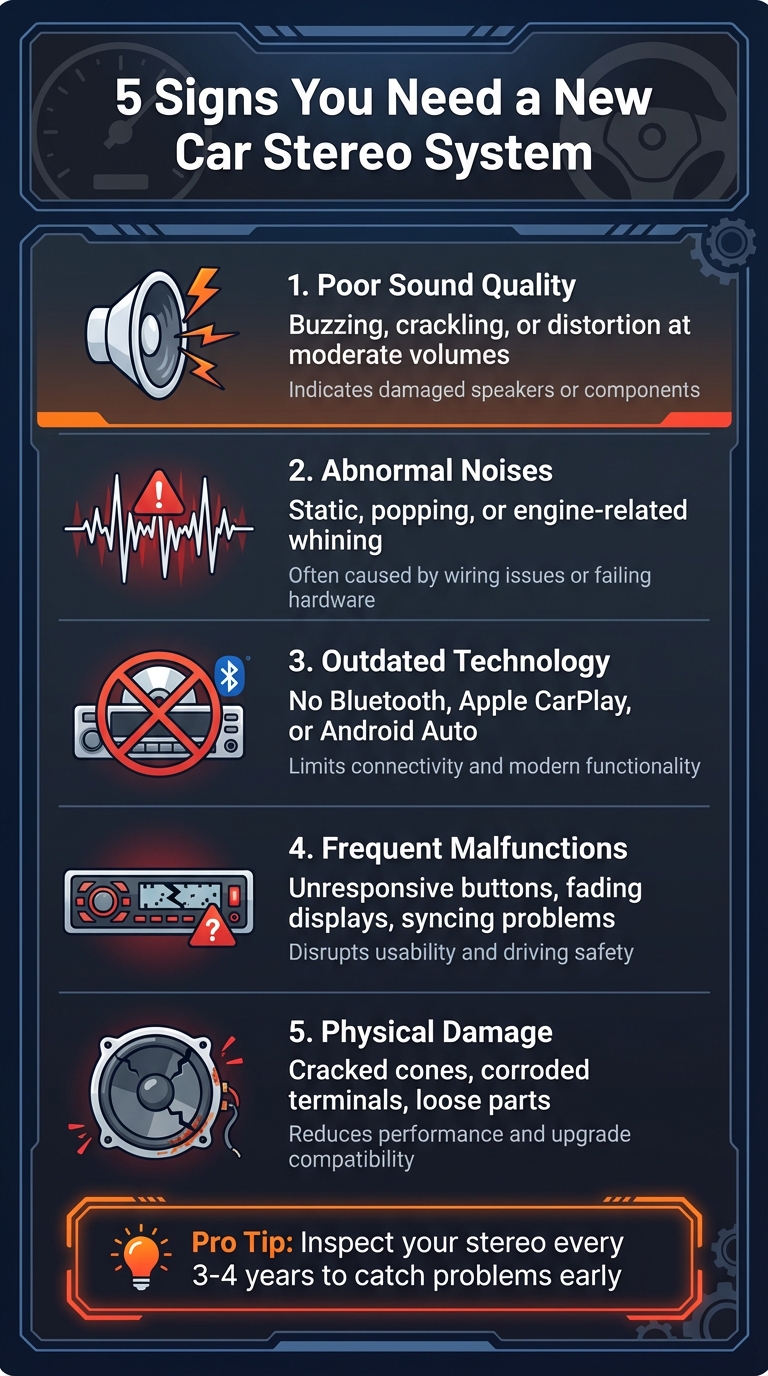
Your car stereo might be due for an upgrade if you notice these five signs:
Poor Sound Quality: Buzzing, crackling, or distortion – even at moderate volumes – indicates damaged speakers or components.
Abnormal Noises: Static, popping, or engine-related whining sounds often stem from wiring issues or failing hardware.
Outdated Technology: Lack of Bluetooth, Apple CarPlay, or Android Auto limits connectivity and functionality.
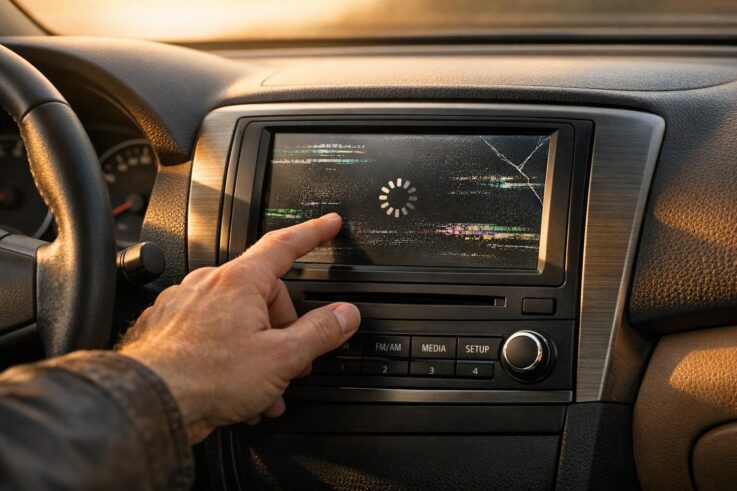
Frequent Malfunctions: Unresponsive buttons, fading displays, or syncing problems disrupt usability and safety.
Physical Damage: Cracked speaker cones, corroded terminals, or loose parts reduce performance and compatibility with upgrades.
Modern systems offer better sound, advanced features, and improved reliability. Regular inspections (every 3–4 years) can help spot problems early. If you’re experiencing any of these issues, a replacement could enhance your driving experience while adding long-term value to your vehicle.
5 Warning Signs You Need a New Car Stereo System
1. Poor Sound Quality
Sound Clarity and Performance
If your favorite tunes suddenly sound dull or lifeless, it’s a telltale sign that something isn’t right. Most factory-installed speakers use thin paper cones and low-powered components to cut costs, which often compromises audio quality right from the start.
The problem becomes more obvious when you notice buzzing, crackling, or fuzzy sounds, even at moderate volumes. These distortions usually mean the speaker cone or voice coil has been damaged, often due to constant vibrations and shifts in temperature. As BestCarAudio.com explains:
A damaged cone can no longer move as precisely as it should, creating uneven sound that robs music of its clarity.
Issues like muddy bass or weak, dull highs often point to failing tweeters or woofers.
To pinpoint the problem, test each speaker individually by adjusting your car’s fader to isolate them. With the system turned off, gently press on each speaker cone. If it feels overly loose or you hear scraping sounds, that speaker likely needs replacing. On the other hand, if a speaker is completely silent, inspect the wiring for loose or corroded connections before jumping to conclusions about hardware failure.
Up next, we’ll dive into the abnormal noises that often signal failing components.
sbb-itb-74b4b25
2. Abnormal Noises and Distortion
System Reliability and Functionality
Poor sound quality is one thing, but when abnormal noises like popping, crackling, or static start coming from your car stereo, it’s a clear sign that something isn’t right. These sounds aren’t just irritating – they’re often the first indicators of a failing component. As Audiomotive explains:
"Static indicates a symptom of a larger problem with your car’s audio system. This can be caused by faulty or loose wiring."
Static and other sound interference demand immediate attention. For example, a buzzing or whining noise that changes with engine speed is often caused by electrical interference. This happens when audio cables are too close to power cables or if the amplifier isn’t properly grounded to the car’s chassis. If you notice these sounds, check for corroded terminals or loose connections at the head unit.
Rattling or vibrating noises during playback can point to physical damage. Issues like a torn speaker cone, a detached surround, or loose mounting hardware can produce these sounds, which will persist no matter the audio source. In some cases, head units may even shut down to protect themselves from shorts or voltage spikes.
If distortion disappears when you lower the volume, it’s likely that your system is being overdriven. However, if the noise continues at all volume levels and across different sources – like Bluetooth, radio, or USB – this usually indicates a hardware failure.
Car Audio Centre, a retailer with a 4.4/5 rating from over 3,000 reviews, advises having your speakers inspected every 3 to 4 years. Regular check-ups like these can help catch problems early, preventing more costly repairs down the line.
If your stereo still relies on CDs or basic AM/FM radio, it’s missing the mark on modern connectivity. Today’s head units come equipped with Apple CarPlay, Android Auto, and dependable Bluetooth, offering seamless navigation, music streaming, and hands-free control. As Dual Electronics puts it:
"If your stereo doesn’t support Apple CarPlay, Android Auto, or even Bluetooth, you’re living in the past."
Even if your system includes Bluetooth, older versions were often unreliable and limited to basic hands-free calling. These outdated features not only lack convenience but also drag down the overall experience.
System Reliability and Functionality
Older stereos often come with worn-out buttons and dim, unresponsive displays, making them frustrating to use. They also struggle to support modern upgrades like backup cameras. In contrast, modern capacitive touchscreens provide brighter displays, accurate colors, and responsive touch, far outperforming older resistive screens.
Additionally, newer head units typically offer higher preamp voltages, often 4V or more, which deliver cleaner audio signals and enhance sound quality when paired with amplifiers. Elijah Nicholson-Messmer from Autoblog explains:
"A new head unit also sends a cleaner signal to your amp, and if it has strong preamp voltage – ideally 4 volts or more – you’ll get lower noise levels and better dynamics."
These advancements not only improve sound quality but also make future upgrades much easier.
Physical Condition and Compatibility with Upgrades
Thinking about adding a subwoofer, external amplifier, or backup camera? An older stereo might not have the necessary inputs or processing power to handle these upgrades. Factory-installed systems generally output just 15 to 25 watts per channel, limiting their ability to support a more robust audio setup. Upgrading to a modern system can open the door to better compatibility and a more powerful performance.
Signs It’s Time to Replace Your Car Speakers⚠️🚗🔊
4. Frequent Malfunctions and Technical Issues
Frequent malfunctions in your car stereo system, beyond just sound problems, often point to more serious underlying issues with the system’s functionality.
System Reliability and Functionality
When your stereo system starts acting up repeatedly, it’s not just an inconvenience – it’s a clear signal that something isn’t functioning as it should. You might notice issues like unresponsive buttons, a display that flickers or fades, or trouble syncing with your smartphone for hands-free calls. As Boca Tint & Audio Blogger notes:
"If [the head unit is] showing signs of age, such as unresponsive buttons or a fading display, it might be time to consider an upgrade."
These problems don’t just make your system harder to use; they can also be a distraction while driving, potentially affecting your safety. Combined with audio glitches, these control and display issues often indicate that it’s time to think about replacing or upgrading your system.
Sound Clarity and Performance
If one of your audio channels goes silent, it’s worth checking the wiring for signs of corrosion or burnout. A multimeter can help you diagnose whether the issue lies in the wiring or the components. For long-term performance, make it a habit to inspect your speakers every 3–4 years. Regular checks like these can help you catch small problems before they turn into major repairs.
5. Physical Wear and Compatibility Problems
Physical Condition and Compatibility with Upgrades
As time passes, your car stereo components can begin to show noticeable signs of wear, which can directly impact performance. For instance, speaker cones may crack, tear, or warp, while foam surrounds can deteriorate or detach. If you inspect your speakers, you might also find corrosion or rust on terminals and wiring – this is especially common in door-mounted speakers that are exposed to moisture and fluctuating temperatures. A simple test involves gently pressing on the speaker cone when the system is off; if you hear scraping or feel any looseness, it’s a sign of internal damage. Persistent rattling or buzzing noises from door panels could also point to issues, such as a detached surround or loose mounting hardware. And these problems aren’t limited to just the speakers.
System Reliability and Functionality
The head unit – the control center of your audio system – can also show its age. Sticky buttons, flickering displays, or missing modern input options like USB ports are common issues with older units. Beyond physical wear, outdated factory systems often lack the necessary outputs or processing power to support modern upgrades, such as backup cameras, external amplifiers, or subwoofers. Additionally, older head units lack modern connectivity features, which restricts access to better audio sources and critical hands-free safety functions.
Benefits of Upgrading with Auto Sound & Security
Upgrading your car stereo system can completely change how you experience driving. Modern systems replace factory-installed components, often designed with cost-cutting in mind, delivering clearer sound, deeper bass, and crisper highs. Newer speakers, crafted from materials like polypropylene, Kevlar, and silk, provide more accurate sound reproduction compared to traditional paper and foam designs.
Today’s systems also make staying connected easier than ever. With seamless integration for Apple CarPlay and Android Auto, you get hands-free calling, voice commands, and easy access to navigation, apps, and entertainment options like streaming music, radio, and USB playback – all from your dashboard.
At Auto Sound & Security, professional installation ensures your new system fits perfectly with your vehicle. As an authorized dealer for leading brands, they match speaker sizes to your vehicle’s original equipment manufacturer (OEM) specifications for a precise fit. Want to keep your factory head unit? No problem. Installers can add amplifiers with speaker-level inputs to improve sound quality while maintaining your dashboard’s original look. Plus, expert installation ensures your system is wired correctly, avoiding potential electrical problems and blending seamlessly into your car’s interior.
Customization options let you take it a step further. Add a DSP (digital signal processor), choose from various subwoofer options, or include sound insulation to minimize road noise. Many modern head units can even integrate with safety features, offering user-friendly enhancements that go beyond sound quality. Auto Sound & Security also provides free estimates, helping you pick the right components for your specific needs.
Beyond the immediate benefits, a professionally installed, top-tier audio system can boost your car’s resale value by attracting buyers who appreciate modern features. With a clean, OEM-style installation and expert craftsmanship, upgrading your audio system is more than just a sound investment – it’s a way to elevate your entire driving experience.
Conclusion
Knowing when to replace your car stereo system goes beyond just improving sound quality – it’s about ensuring safety, convenience, and the overall well-being of your vehicle. A faulty system can lead to more than just poor audio; it might cause electrical problems or even complete system failure if left unchecked. Regular inspections can help identify issues early, preventing bigger headaches down the road.
Taking action early not only keeps your vehicle in top shape but also enhances your driving experience. Upgrading your stereo system opens the door to modern features that make driving safer and more enjoyable. Plus, better sound quality at lower volumes can help reduce fatigue during long trips. As Elijah Nicholson-Messmer, a contributing writer for Autoblog, puts it:
"Upgrading car audio enhances driving comfort and enjoyment, not just loudness or bass".
Beyond the immediate perks, a new stereo system can also add long-term value to your car. It helps avoid costly repairs and increases resale appeal by attracting buyers who appreciate up-to-date technology. Modern aftermarket systems bring the clarity and power that make every drive more enjoyable.
For a free, personalized estimate, reach out to Auto Sound & Security. As an authorized dealer for top brands like Viper, Compustar, Kicker, Pioneer, Kenwood, JVC, and Alpine, their skilled installers ensure everything from precise speaker placement to clean wiring and expert tuning. The result? A sound system that perfectly matches your needs and budget, turning your daily drive into something special.
FAQs
How do I check if my car speakers are damaged?
To figure out if your car speakers are damaged, start by disconnecting them from the amplifier or head unit. Once they’re disconnected, you can perform a quick test using a 1.5V battery. Briefly touch the speaker terminals with the battery. If the speaker cone moves or you hear a popping sound, the speaker is likely functional. If there’s no movement or sound, the speaker might be damaged.
For a more accurate check, grab a multimeter and set it to measure resistance. Place the probes on the speaker terminals. A proper reading should match the speaker’s rated impedance (commonly 4 or 8 ohms). If the reading is extremely high or infinite, the voice coil might be broken. On the other hand, a very low reading could point to a shorted coil.
These simple steps can help you figure out if your speakers need fixing or replacing, so your car audio system stays in top shape.
What features should I consider when upgrading my car stereo?
When upgrading your car stereo, focus on features that bring convenience, safety, and entertainment to your drive. Here are some top options to consider:
Bluetooth® connectivity: This lets you make hands-free calls and stream music wirelessly, keeping your drive both safe and enjoyable.
Smartphone integration: Systems like Apple CarPlay and Android Auto allow you to use navigation, control music apps, and access voice commands directly from your dashboard.
Streaming and audio options: Compatibility with services like Spotify and Pandora, along with USB and auxiliary inputs, ensures high-quality audio playback for all your favorite tunes.
These features not only enhance sound quality but also make your car stereo more in tune with today’s tech-savvy lifestyle.
How often should I check my car stereo system for issues?
It’s smart to give your car stereo system a regular once-over to make sure everything’s running smoothly and to spot any potential problems early. While there’s no hard-and-fast rule, a good guideline is to inspect it every 6 to 12 months – or sooner if you notice issues like distorted sound, poor audio quality, or connection troubles.
Watch out for warning signs such as muffled sound, crackling noises, or buttons and controls that don’t respond as they should. If your stereo is older or has been through tough conditions – like extreme heat or cold – you might want to check it more often. Taking a proactive approach can help you avoid costly repairs and keep your sound system delivering clear, crisp audio for every drive.
We use cookies to ensure that we give you the best experience on our website. If you continue to use this site we will assume that you are happy with it.